


Commercial kitchens are among the most hazardous workplaces for slips and falls. Water, grease, and constant foot traffic create dangerous conditions that put your staff at risk daily. The right non-slip flooring and strategic mat placement can reduce slip-related accidents by over 50%, protecting workers and your bottom line. This guide helps facility managers and business owners navigate safety standards, material choices, testing methods, and maintenance strategies to create safer kitchen environments.
Table of Contents
- Introduction To Non Slip Kitchen Flooring In Commercial Settings
- Regulatory Standards And Safety Requirements
- Common Flooring Materials And Their Properties
- Testing And Compliance Metrics
- Role And Benefits Of Non-Slip Mats
- Maintenance And Cleaning Best Practices
- Cost Considerations And Longevity
- Common Misconceptions And Clarifications
- Enhance Kitchen Safety With Mats4U’s Non Slip Solutions
- Frequently Asked Questions About Non Slip Kitchen Floors
Key takeaways
| Point | Details |
|---|---|
| Slip resistance with COF ≥ 0.6 is essential | Meeting FDA recommendations dramatically reduces workplace injuries and ensures regulatory compliance. |
| Multiple flooring materials suit different needs | Epoxy, quarry tile, vinyl, and rubber each offer unique benefits for specific kitchen zones and budgets. |
| Non-slip mats cut accidents by 50% | Strategic mat placement in high-risk areas provides crucial protection beyond flooring alone. |
| Regular maintenance preserves safety | Consistent cleaning and inspection maintain slip resistance and extend material lifespan. |
| Total cost of ownership varies significantly | Initial investment and longevity differ across options, impacting long-term budget planning. |
Introduction to non slip kitchen flooring in commercial settings
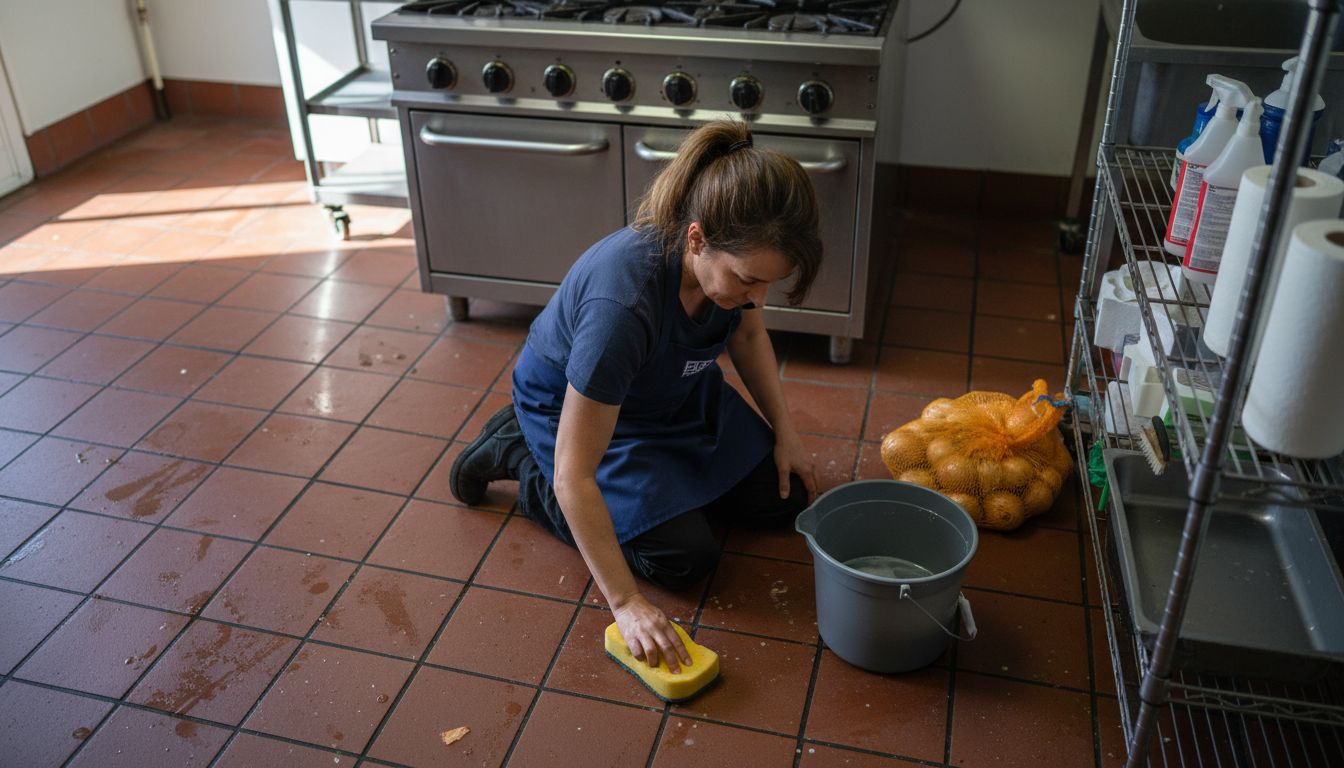
Your kitchen floor faces brutal daily punishment. Hot oil spills, constant water exposure, and dozens of workers rushing through service create perfect conditions for disaster. Slip and fall injuries are leading workplace accidents in US commercial kitchens, costing businesses thousands in workers’ compensation, lost productivity, and potential lawsuits.
The challenge goes beyond immediate safety concerns. You must balance multiple competing demands:
- Meeting OSHA slip resistance guidelines and FDA Food Code requirements
- Maintaining sanitary surfaces that prevent bacterial growth
- Choosing materials durable enough to withstand heavy equipment and constant cleaning
- Working within realistic budget constraints while ensuring worker safety
Facility managers often underestimate the complexity of these decisions. A floor that looks clean and feels solid might still fail under wet conditions. Surface texture, material composition, and proper maintenance all determine whether your flooring actually protects your team or creates hidden hazards.
Understanding the risk environment helps you prioritize solutions. Kitchens combine three dangerous elements: moisture from washing and cooking, grease from food preparation, and high foot traffic during peak service hours. This combination demands specialized flooring solutions designed specifically for these extreme conditions.
The stakes are high. Beyond worker safety, inadequate flooring can lead to failed health inspections, regulatory fines, and damaged reputation. Making informed choices now prevents costly problems later and demonstrates your commitment to employee wellbeing.
Regulatory standards and safety requirements
Navigating compliance requirements protects your business and workers. Multiple agencies set standards that govern commercial kitchen flooring, and understanding these benchmarks guides your material selection.
OSHA requires kitchen floors to be kept clean and dry and emphasizes slip-resistant materials, though the agency does not specify an absolute coefficient of friction value. Instead, OSHA focuses on hazard prevention through proper maintenance and appropriate material selection. This flexible approach places responsibility on facility managers to assess their specific risk factors.
The FDA Food Code recommends a minimum static coefficient of friction (COF) of 0.6 for kitchen floors. This benchmark provides concrete guidance for evaluating flooring options. Products meeting or exceeding 0.6 COF significantly reduce slip risks under both dry and wet conditions.
Additional considerations include:
- ADA standards mandate accessible, slip-resistant surfaces to accommodate all workers and visitors
- Local health departments may enforce additional sanitation and safety requirements
- Insurance providers often require documented compliance to maintain coverage
- Regular testing and maintenance records demonstrate due diligence in liability cases
Meeting these standards is not optional. Non-compliant flooring exposes you to regulatory penalties, increased insurance premiums, and legal liability if accidents occur. Beyond avoiding consequences, proper compliance creates genuine safety improvements that protect your most valuable asset: your people.
Investing in non-slip floor mats for compliance supplements permanent flooring in high-risk zones. Strategic mat placement in dishwashing areas, near fryers, and at entry points where water tracks in provides extra protection where accidents most commonly occur.
Common flooring materials and their properties
Choosing the right material requires understanding how each option performs under real kitchen conditions. No single solution works perfectly for every situation, so matching materials to specific zones and needs optimizes both safety and budget.
Quarry Tile delivers exceptional durability and natural slip resistance. The fired clay surface creates texture that maintains grip even when wet. Quarry tile withstands decades of heavy use and resists chemical damage from cleaning agents. However, installation requires skilled labor and proper grout sealing to prevent moisture penetration. The higher upfront investment pays off through longevity and minimal replacement costs.
Epoxy flooring offers a seamless, slip-resistant, chemical-resistant surface but requires expert installation. The liquid application creates a monolithic surface without grout lines where bacteria can hide. Textured finishes enhance slip resistance, and the material bonds directly to concrete substrates for superior durability. Professional installation costs more initially but delivers long-term value through easy maintenance and extended service life.
Vinyl Flooring provides cost-effective water resistance suitable for lighter-duty applications. Commercial-grade vinyl withstands moderate traffic and offers decent slip resistance when properly maintained. However, vinyl wears faster than tile or epoxy under heavy equipment and constant foot traffic. Select thicker gauge products designed specifically for commercial kitchens to maximize lifespan.
Rubber Flooring excels in specific applications where cushioning matters. The material provides excellent slip resistance and reduces fatigue for workers standing long hours. Rubber works well in prep areas, walk-in coolers, and other zones where extreme heat and grease exposure are limited. The cushioning effect also protects dropped dishware and reduces noise.
Pro Tip: Combine permanent flooring with best non-slip restaurant mats for layered protection. Place non slip kitchen mats in critical zones where spills concentrate, and use non slip kitchen rugs in prep areas for added comfort and safety.
| Material | Slip Resistance | Durability | Maintenance | Best Use |
|---|---|---|---|---|
| Quarry Tile | Excellent | Very High | Moderate | Cooking zones, high traffic |
| Epoxy | Excellent | High | Easy | Full kitchen coverage |
| Vinyl | Good | Moderate | Easy | Light-duty prep areas |
| Rubber | Very Good | Moderate | Moderate | Standing work zones, coolers |
Testing and compliance metrics
You cannot manage what you do not measure. Slip resistance testing provides objective data to verify your flooring performs as expected and maintains safety standards over time.
Dynamic COF (DCoF) and Pendulum testing measure flooring slip resistance under wet conditions. These standardized methods simulate real-world scenarios where water or grease contact the floor surface. Dynamic testing better reflects actual slip mechanics than static tests because it accounts for movement and momentum.
Key testing benchmarks include:
- COF values of 0.6 or higher indicate acceptable slip resistance for commercial kitchens
- R-ratings (such as R12) provide European-standard classifications for slip resistance grades
- Wet testing conditions more accurately predict real-world kitchen performance than dry tests
- Regular retesting ensures floors maintain properties as surface texture wears over time
Schedule testing during installation to establish baseline performance, then retest annually or after any floor refinishing. Document all results to demonstrate compliance and track performance trends. Declining slip resistance signals the need for maintenance or resurfacing before accidents occur.
Independent testing provides credible verification. Manufacturer claims alone do not constitute compliance proof. Third-party lab results or onsite testing with calibrated equipment gives you defensible documentation for regulators and insurance providers.
Understanding these metrics helps you evaluate product specifications critically. A floor advertised as slip-resistant without supporting test data may not meet your actual needs. Demand COF values and testing method documentation before making purchasing decisions.
Implementing rigorous testing protocols for non slip industrial flooring testing demonstrates professional risk management and protects your organization from liability exposure.
Role and benefits of non-slip mats
Even the best permanent flooring benefits from supplemental protection in critical zones. Non-slip mats address specific high-risk areas where accidents concentrate, providing focused safety improvements without complete floor replacement.
Non-slip mats can reduce slip-related accidents by over 50% and increase ergonomic comfort. This dramatic impact comes from strategic placement where water, grease, and spills accumulate most frequently. Mats create an additional safety layer exactly where your team needs it most.
The ergonomic benefits extend beyond slip prevention. Anti-fatigue properties reduce strain on legs and backs during long shifts, decreasing injury rates and improving worker productivity. Comfortable employees work more efficiently and take fewer sick days, delivering measurable operational benefits alongside safety improvements.
Optimal mat placement includes:
- Dishwashing stations where constant water exposure creates hazards
- Fryer and grill areas prone to grease buildup
- Entrance zones where tracked-in water accumulates
- Beverage stations and ice machines with frequent spills
- Prep areas where workers stand for extended periods
Pro Tip: Replace mats showing visible wear, curling edges, or reduced drainage capacity. Compromised mats become tripping hazards that defeat their safety purpose. Inspect weekly and maintain a replacement schedule based on traffic levels.
Mats prove particularly valuable during transitions. If you cannot immediately replace aging flooring, strategic mat placement provides interim protection while you plan renovations. This phased approach maintains safety without requiring massive capital expenditures all at once.
Explore industrial kitchen floor mats benefits to understand how professional-grade solutions deliver superior performance compared to consumer products. Commercial mats are engineered for your environment’s specific demands.
Maintenance and cleaning best practices
Even the best flooring and mats fail without proper maintenance. Your cleaning protocols directly impact slip resistance, hygiene compliance, and material longevity.
Establish a regular cleaning schedule using products that preserve rather than degrade slip-resistant properties. Some detergents leave residues that actually increase slip hazards by creating slick films on floor surfaces. Select cleaners specifically formulated for commercial kitchen use that maintain surface texture.
Daily maintenance should include:
- Immediate spill cleanup to prevent grease and liquid accumulation
- End-of-shift mopping with appropriate cleaning solutions
- Mat removal and cleaning to prevent bacterial growth underneath
- Visual inspection for damage, wear, or developing hazards
Weekly and monthly tasks extend equipment life and maintain compliance. Deep clean grout lines in tiled floors to prevent degradation. Inspect epoxy surfaces for chips or cracks that compromise the seamless barrier. Test mat drainage and slip resistance to catch performance degradation early.
Pro Tip: Avoid harsh chemicals that erode slip-resistant coatings or surface texture. Acidic cleaners may etch certain materials, while abrasive scrubbing can smooth textured surfaces that provide traction. Consult manufacturer guidelines for approved cleaning methods.
Document all maintenance activities. Records demonstrate compliance during inspections and provide valuable data if accidents occur. Your maintenance logs show due diligence and proactive risk management, which can significantly impact liability determinations.
Proper techniques for installing kitchen non skid mats ensure they perform correctly from day one. Follow manufacturer instructions precisely to maximize effectiveness and longevity. Regular care following non slip mats maintenance best practices preserves their protective properties throughout their service life.
Cost considerations and longevity
Smart financial planning balances upfront investment against long-term value. The cheapest initial option often costs more over time through frequent replacement and higher accident rates.
Quarry tile has higher upfront cost but longer lifespan; vinyl is cheaper but requires earlier replacement. Quarry tile installations may cost $10 to $20 per square foot installed, but the material lasts 20 to 30 years with minimal maintenance. Vinyl flooring costs $3 to $8 per square foot but typically needs replacement within 10 to 15 years under heavy commercial use.
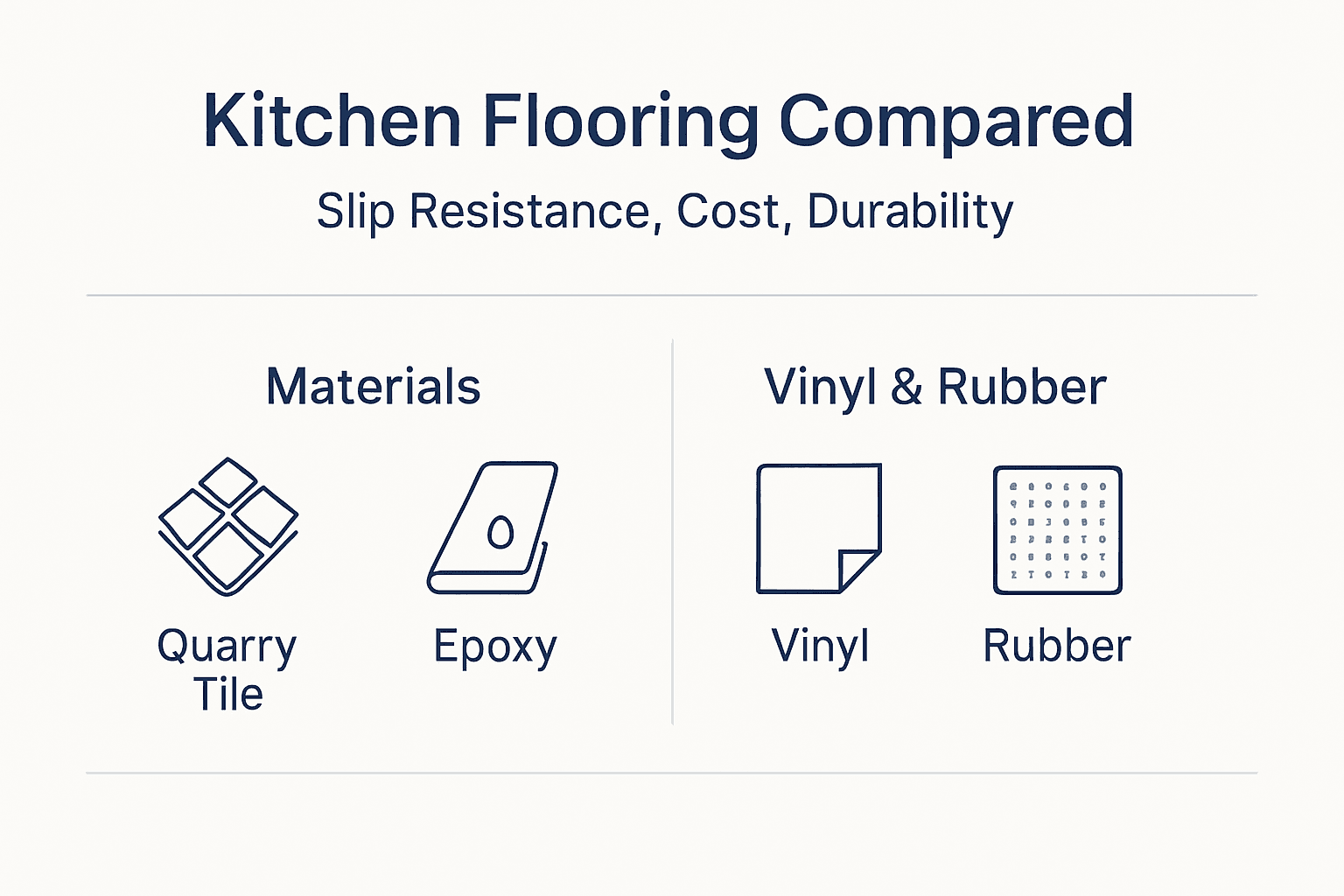
Epoxy flooring pricing varies based on system complexity and preparation requirements. Basic epoxy costs $3 to $12 per square foot, while high-performance systems with enhanced slip resistance and chemical resistance range from $7 to $20 per square foot. Professional installation adds labor costs but ensures proper adhesion and performance.
Non-slip mats provide cost-effective supplemental protection without major renovation expenses. Quality commercial mats range from $50 to $300 depending on size and features, delivering immediate safety improvements for modest investment. Strategic mat placement protects high-risk zones while you budget for eventual floor replacement.
Consider total cost of ownership including:
- Initial material and installation expenses
- Maintenance product costs and labor hours
- Expected lifespan before replacement becomes necessary
- Accident costs avoided through improved safety
- Energy efficiency impacts of different materials
Budget decisions should weigh these factors against your specific operational needs. A busy restaurant kitchen with heavy traffic justifies premium flooring investment, while a light-use prep area may function well with more economical options.
Review non slip kitchen floor mats cost and industrial kitchen mats cost and longevity to understand how mat investments fit into your overall flooring strategy.
| Flooring Type | Cost per Sq Ft | Typical Lifespan | Total Cost |
|---|---|---|---|
| Quarry Tile | $10 - $20 | 20 - 30 years | Lowest over time |
| Epoxy | $7 - $20 | 15 - 25 years | Moderate |
| Vinyl | $3 - $8 | 10 - 15 years | Higher due to replacement |
| Rubber | $4 - $12 | 10 - 20 years | Moderate |
Common misconceptions and clarifications
Separating fact from fiction helps you avoid costly mistakes. Several persistent myths undermine kitchen safety and waste resources.
Misconception: All commercial kitchen floors are inherently slip resistant.
Reality: Surface material and maintenance determine actual performance. A floor may meet building codes yet still become dangerously slippery when contaminated with grease or water. Regular testing and cleaning maintain slip resistance over time.
Misconception: Non-slip mats are unnecessary if the floor is rated slip-resistant.
Reality: Mats provide crucial supplemental protection in high-risk zones where spills concentrate. Even excellent permanent flooring benefits from additional coverage at dishwashing stations, fryer areas, and entry points. Layered protection delivers the best results.
Misconception: Vinyl flooring performs as well as quarry tile for heavy commercial use.
Reality: Vinyl costs less initially but wears faster under heavy equipment, constant foot traffic, and harsh cleaning chemicals. While suitable for lighter applications, vinyl requires more frequent replacement in busy kitchen environments, increasing long-term costs.
Misconception: Manufacturer slip resistance claims guarantee safety.
Reality: Marketing claims require independent verification through standardized testing. Demand documented COF values and testing method specifications before purchasing. Some products marketed as slip-resistant fail to meet FDA-recommended 0.6 COF thresholds.
Misconception: Once installed properly, slip-resistant flooring requires no special maintenance.
Reality: Surface properties degrade over time without proper care. Grease buildup, worn texture, and improper cleaning all compromise slip resistance. Regular maintenance and periodic testing ensure floors continue protecting your team effectively.
Understanding these realities helps you make evidence-based decisions that genuinely improve safety rather than simply checking compliance boxes.
Enhance kitchen safety with Mats4U’s non slip solutions
Transforming knowledge into action starts with the right products. Mats4U specializes in commercial-grade non-slip mats engineered specifically for demanding kitchen environments.
Our premium custom floor mats combine superior slip resistance with professional branding opportunities. Custom printed designs reinforce your brand while delivering the safety performance your kitchen requires. These mats withstand heavy traffic and frequent cleaning while maintaining their protective properties.
Anti fatigue industrial mats address both safety and ergonomic concerns simultaneously. The cushioned construction reduces worker fatigue during long shifts while textured surfaces maintain traction even when wet. Your team stays safer and more comfortable throughout their workday.
Every mat we offer meets rigorous commercial standards for durability, slip resistance, and ease of maintenance. We understand the unique demands of professional kitchens because we specialize in serving facilities like yours. Our products deliver lasting value through superior materials and thoughtful design.
Explore our full selection at mats4u.com to find solutions perfectly matched to your specific needs and budget. Our team provides expert guidance to help you select the right products for each zone in your kitchen. Contact us today to discuss how our non-slip mats can enhance safety and comfort in your facility.
Frequently asked questions about non slip kitchen floors
What is the minimum slip resistance COF recommended for commercial kitchen floors?
The FDA Food Code recommends a minimum static coefficient of friction of 0.6 for commercial kitchen floors. This benchmark significantly reduces slip risks under wet conditions common in food service environments.
Can non-slip mats alone ensure full kitchen floor safety?
No, mats supplement but do not replace proper flooring. Use non-slip mats in high-risk zones like dishwashing and fryer areas for additional protection, but ensure the underlying floor also meets slip resistance standards.
How often should slip resistance testing be performed?
Test floors during initial installation to establish baseline performance, then retest annually or after refinishing work. More frequent testing may be necessary in extremely high-traffic kitchens or if you notice visible wear patterns.
What flooring type is best for greasy cooking zones?
Quarry tile and epoxy flooring perform best near fryers and grills. Both materials resist grease penetration, maintain slip resistance when contaminated, and withstand harsh chemical cleaning required to remove oil buildup.
Are vinyl floors a cost-effective long-term option?
Vinyl offers lower upfront costs but requires more frequent replacement under heavy commercial use. For busy kitchens, quarry tile or epoxy delivers better long-term value despite higher initial investment.


