


Long shifts in a busy commercial kitchen can take a toll on every worker’s comfort and safety. Facility managers across the United States know that slipping hazards and sore feet are routine risks in these high-traffic spaces. Choosing the right industrial kitchen floor mat can make all the difference by offering both slip resistance and anti-fatigue benefits. Discover how selecting a durable, well-engineered floor mat can help create a safer and more comfortable work environment for your team.
Table of Contents
- What Are Industrial Kitchen Floor Mats?
- Types of Floor Mats for Commercial Kitchens
- Key Features and Performance Factors
- OSHA Regulations and Safety Compliance
- Common Pitfalls in Selection and Care
Key Takeaways
| Point | Details |
|---|---|
| Industrial Kitchen Floor Mats are Essential | They play a critical role in preventing accidents and improving worker comfort in commercial food preparation environments. |
| Significant Material Characteristics | Key features include slip resistance, chemical and heat resistance, and ergonomic design to enhance safety and comfort. |
| Types of Mats for Specific Applications | Different mat types, such as anti-slip and drainage mats, cater to unique challenges in various kitchen zones. |
| OSHA Compliance is Crucial | Maintaining compliance with safety standards is vital for ensuring worker protection and preventing workplace accidents. |
What Are Industrial Kitchen Floor Mats?
Industrial kitchen floor mats are specialized safety solutions designed to protect workers and improve workplace conditions in commercial food preparation environments. Floor mats for industrial kitchens serve multiple critical functions beyond simple floor covering.
These mats are engineered to provide essential protection in high-traffic, potentially hazardous kitchen settings. Their primary purposes include:
- Preventing slip and fall accidents
- Reducing worker fatigue during long shifts
- Protecting underlying floor surfaces
- Maintaining workplace hygiene standards
- Absorbing impact and providing cushioning for standing workers
Typically constructed from durable materials like rubber, vinyl, or specialized synthetic compounds, industrial kitchen floor mats are designed to withstand extreme conditions. They feature unique characteristics such as slip-resistant surfaces, drainage capabilities, and ergonomic designs that support worker comfort and safety.
Key Material Characteristics include:
- High-density rubber construction
- Chemical and heat resistance
- Antimicrobial surface treatments
- Quick-drainage perforations
- Beveled edge designs to prevent tripping
Pro tip: When selecting industrial kitchen floor mats, prioritize materials that can withstand daily cleaning, potential chemical exposures, and frequent heavy foot traffic.
Types of Floor Mats for Commercial Kitchens
Commercial kitchen environments require specialized floor mat solutions tailored to specific workplace needs. Types of industrial floor mats vary widely, each designed to address unique safety and ergonomic challenges in high-intensity food preparation settings.
The primary categories of commercial kitchen floor mats include:
- Anti-Slip Mats: Engineered to provide maximum traction in wet and greasy conditions
- Drainage Mats: Feature perforated surfaces to channel liquids away from walking areas
- Ergonomic Cushion Mats: Designed to reduce worker fatigue during long shifts
- Runner Mats: Extended mats covering primary walkways and high-traffic zones
- Chemical-Resistant Mats: Constructed to withstand harsh cleaning agents and potential spills
Each mat type offers distinct advantages for different kitchen zones. Rubber mats with textured surfaces provide exceptional slip resistance, while specialized synthetic materials offer enhanced durability and easy cleaning. Advanced manufacturing techniques now allow for mats that combine multiple protective features, such as antimicrobial surfaces and shock-absorbing capabilities.
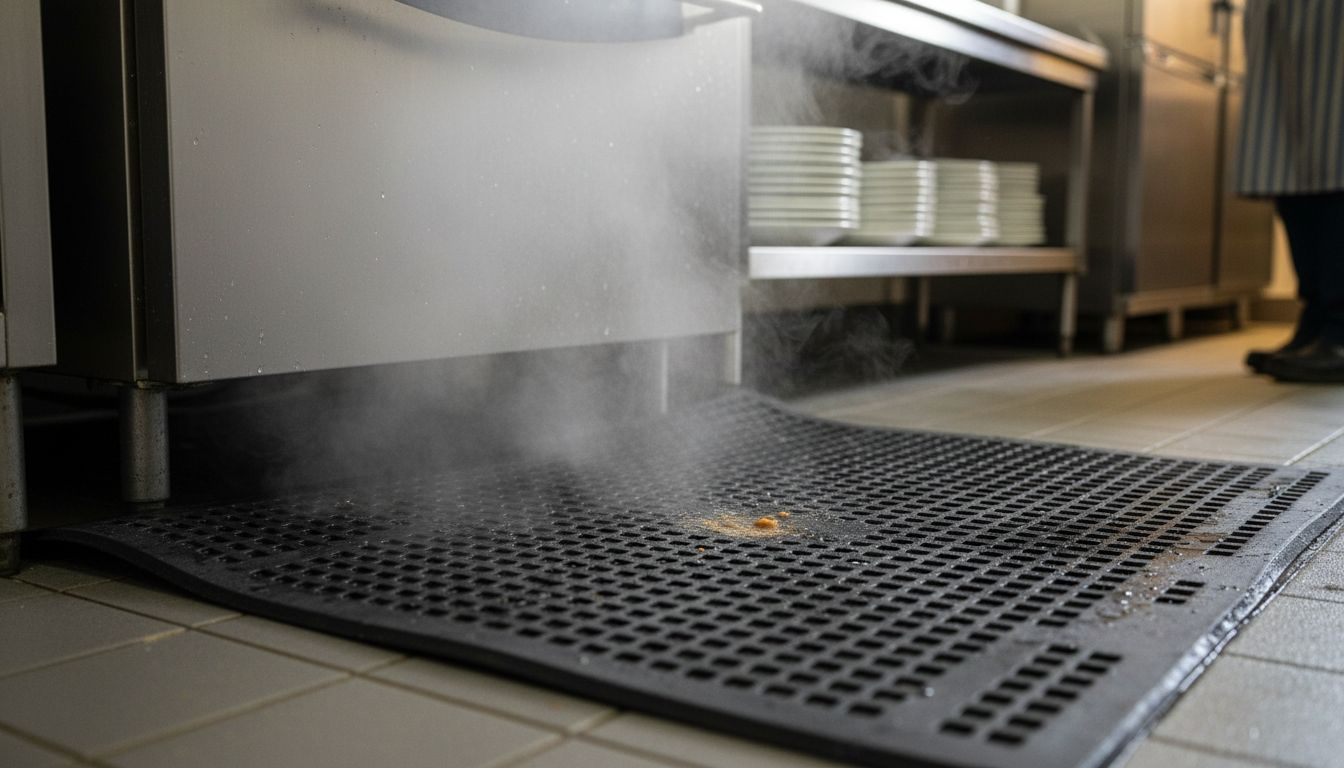
Here’s a comparison of common industrial kitchen mat types and their ideal applications:
| Mat Type | Best Application Area | Key Benefit |
|---|---|---|
| Anti-Slip Mat | Dishwashing zone | Reduces slip accidents |
| Drainage Mat | Food prep near sinks | Drains liquid efficiently |
| Ergonomic Cushion Mat | Cooking lines | Minimizes worker fatigue |
| Runner Mat | High-traffic aisles | Protects large walkways |
| Chemical-Resistant Mat | Cleaning and sanitation areas | Withstands harsh solutions |
Kitchen floor mats are not just accessories – they are critical safety infrastructure that directly impacts worker health and workplace efficiency.
Modern commercial kitchen mats incorporate sophisticated design elements like beveled edges to prevent tripping, raised patterns for enhanced grip, and materials resistant to heat, oils, and chemical cleaners. Facility managers must carefully select mats that match specific area requirements, considering factors like foot traffic intensity, potential liquid exposure, and specific workplace hazards.
Key Selection Considerations:
- Slip resistance rating
- Material durability
- Ease of cleaning
- Thickness and cushioning
- Temperature and chemical resistance
- Compatibility with kitchen workflow
Pro tip: Rotate and regularly inspect kitchen floor mats to ensure consistent performance and identify potential wear before it compromises workplace safety.
Key Features and Performance Factors
Industrial kitchen floor mats are engineered with complex performance specifications that go far beyond simple floor coverings. Industrial floor mat performance standards establish rigorous criteria for evaluating mat effectiveness and durability in high-stress environments.
The most critical performance factors for commercial kitchen floor mats include:
- Abrasion Resistance: Ability to withstand constant foot traffic and equipment movement
- Chemical Resilience: Maintaining structural integrity when exposed to cleaning agents
- Impact Absorption: Reducing physical stress on workers during extended shifts
- Temperature Stability: Performing consistently across varying kitchen temperature ranges
- Slip Resistance: Preventing workplace accidents in wet and greasy conditions
Advanced manufacturing techniques have dramatically improved mat performance characteristics. Modern industrial kitchen mats now incorporate sophisticated material science, combining multiple protective features like antimicrobial surfaces, shock-absorbing technologies, and enhanced durability.
The following table summarizes how critical floor mat features align with common workplace goals:
| Feature | Supports Safety Goal | Enhances Worker Comfort |
|---|---|---|
| Slip Resistance | Prevents falls and injuries | Lowers staff accident rates |
| Ergonomic Cushioning | Lessens body strain | Increases shift productivity |
| Chemical Resistance | Maintains mat integrity | Extends product service life |
| Quick Drainage | Controls moisture buildup | Improves hygiene environment |
Performance isn’t just about materials - it’s about creating a safer, more comfortable workplace environment.
Engineering considerations play a crucial role in mat selection. Facility managers must analyze specific workplace conditions, including foot traffic intensity, potential liquid exposure, temperature variations, and specific safety requirements. Key engineering metrics like puncture resistance, electrical conductivity, and flexibility become critical when selecting the right floor mat solution.
Performance Evaluation Criteria:
- Material tensile strength
- Weight-bearing capacity
- Drainage efficiency
- Compression recovery rate
- Thermal shock resistance
- Long-term dimensional stability
Pro tip: Request performance certification documentation from manufacturers to objectively compare mat specifications and ensure workplace safety standards are consistently met.
OSHA Regulations and Safety Compliance
Safety in industrial kitchen environments is governed by strict regulatory standards designed to protect workers from potential hazards. OSHA walking-working surface regulations establish comprehensive guidelines for floor mat selection, installation, and maintenance in commercial settings.
Key OSHA compliance requirements for industrial kitchen floor mats include:
- Surface Condition: Maintaining clean, dry, and hazard-free walking surfaces
- Load Capacity: Ensuring mats can support maximum intended weight
- Regular Inspection: Conducting periodic assessments of mat condition
- Hazard Prevention: Promptly addressing potential slip or trip risks
- Material Integrity: Using mats that maintain structural performance
Facility managers must implement a comprehensive approach to floor mat safety. This involves not just selecting appropriate mats, but also developing systematic inspection protocols, training staff on proper mat maintenance, and creating a proactive safety culture that prioritizes workplace protection.
Compliance is not a one-time achievement, but an ongoing commitment to worker safety and workplace standards.
The regulatory framework extends beyond simple mat selection. Detailed compliance measures require facility managers to document mat condition, track replacement cycles, and ensure that floor coverings meet specific performance standards. This includes maintaining mats that are free from tears, holes, or significant wear that could compromise worker safety.
OSHA Compliance Checklist:
- Annual mat condition assessment
- Documentation of mat replacement cycles
- Training records for safety protocols
- Maintenance logs for floor surface conditions
- Immediate repair or replacement of damaged mats
- Verification of mat load-bearing capabilities
Pro tip: Develop a standardized inspection protocol that includes monthly visual assessments and documented maintenance records to demonstrate ongoing OSHA compliance.
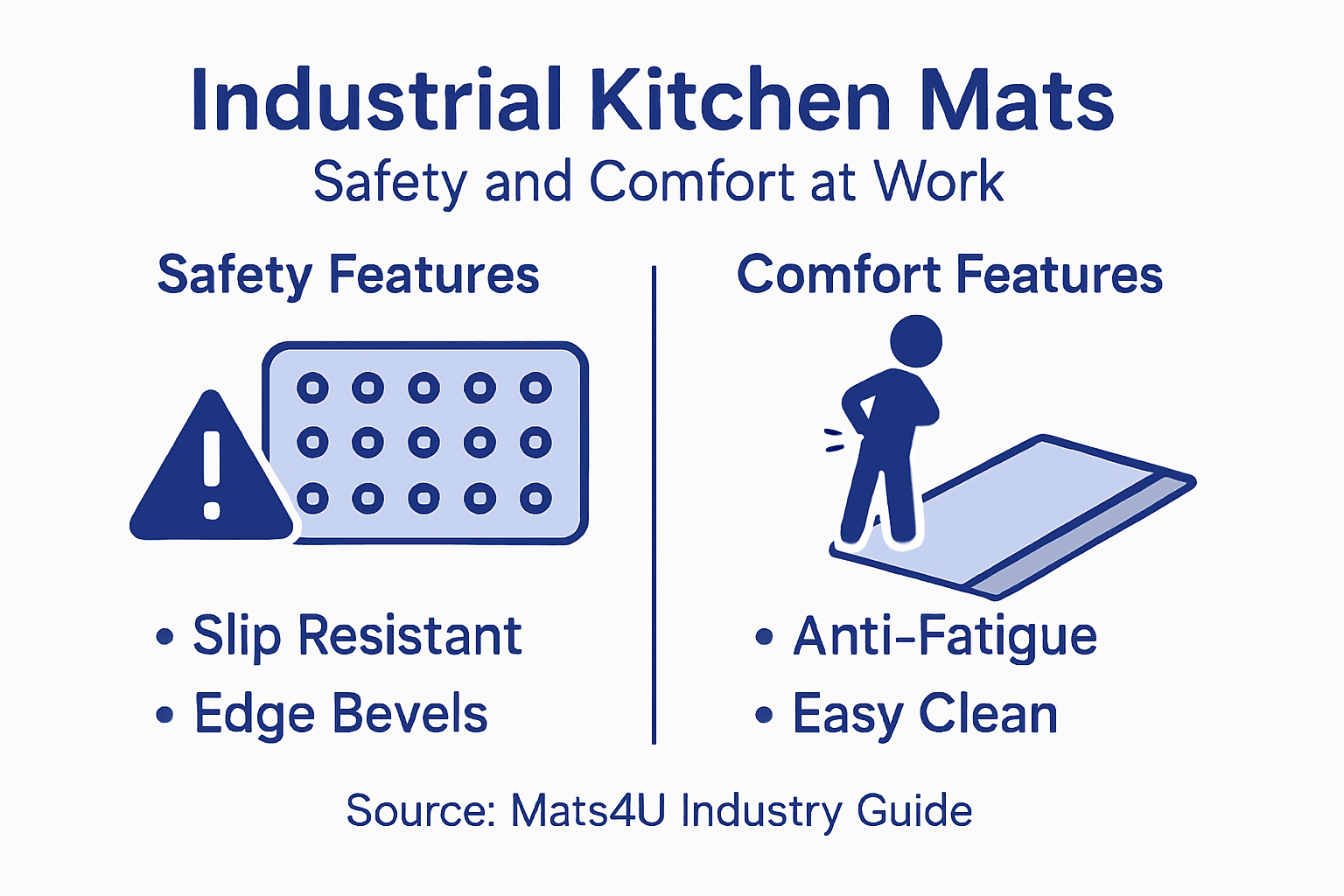
Common Pitfalls in Selection and Care
Selecting and maintaining industrial kitchen floor mats requires careful consideration and strategic planning. Common floor mat selection challenges can significantly impact workplace safety and long-term mat performance.
Facility managers frequently encounter several critical selection and maintenance pitfalls:
- Material Mismatch: Choosing mats incompatible with specific kitchen environments
- Inadequate Slip Resistance: Selecting mats without proper traction characteristics
- Poor Installation: Improper positioning creating potential tripping hazards
- Inconsistent Maintenance: Neglecting regular inspection and cleaning protocols
- Cost-Cutting Compromises: Prioritizing price over safety and durability
Environmental conditions play a crucial role in mat performance and longevity. Different kitchen zones require specialized mat solutions, with factors like moisture levels, temperature fluctuations, chemical exposure, and traffic intensity dramatically influencing mat effectiveness.
Not all floor mats are created equal - understanding specific workplace requirements is fundamental to making the right selection.
The most significant risk comes from overlooking nuanced performance requirements. Systematic evaluation criteria must include assessing mat material compatibility, checking load-bearing capacity, verifying chemical resistance, and understanding specific workplace ergonomic needs.
Critical Evaluation Checklist:
- Analyze specific kitchen environment characteristics
- Test mat material against expected stress conditions
- Verify slip resistance ratings
- Assess chemical and temperature tolerance
- Confirm ergonomic support features
- Evaluate long-term maintenance requirements
Pro tip: Conduct comprehensive pre-installation testing by requesting manufacturer samples and performing rigorous workplace simulations before full-scale implementation.
Enhance Safety and Comfort with Expert Industrial Kitchen Floor Mats
Industrial kitchens face unique challenges like slip hazards, worker fatigue, and exposure to harsh chemicals. This article highlights how choosing the right floor mat with features such as slip resistance, ergonomic cushioning, and chemical durability is critical for maintaining a safe and efficient workspace. Ignoring these key factors can lead to accidents and costly downtime.
At Mats4U, we understand these concerns and offer a wide selection of high-quality solutions designed specifically for demanding commercial environments. From our Commercial Mats that provide excellent traction and durability to our specialized Anti-Fatigue Mats that reduce strain during long shifts, every product supports your workplace safety goals. Don’t compromise on protective floor coverings that impact both worker wellbeing and productivity.
Explore our complete range of industrial and commercial-grade mats today at Mats4U.com and take action now to safeguard your team with mats built to last. Improve safety and comfort in your kitchen by selecting mats designed for your specific demands.
Frequently Asked Questions
What are the main benefits of using industrial kitchen floor mats?
Industrial kitchen floor mats provide essential protection against slip and fall accidents, reduce worker fatigue during long shifts, protect underlying floor surfaces, maintain hygiene standards, and absorb impact to provide cushioning for standing workers.
How do I choose the right type of floor mat for my commercial kitchen?
To choose the right mat, consider factors such as slip resistance rating, material durability, ease of cleaning, thickness and cushioning, and specific kitchen workflow requirements. Each mat type serves different purposes, such as anti-slip for wet areas or ergonomic mats for prolonged standing.
What features should I look for in industrial kitchen floor mats?
Key features include high-density rubber or synthetic construction for durability, chemical and heat resistance, antimicrobial surface treatments, quick-drainage capabilities, and beveled edges to prevent tripping. These characteristics enhance safety and comfort in busy kitchen environments.
How can I ensure compliance with safety regulations when using floor mats?
To ensure compliance with safety regulations, regularly inspect the mats for wear and tear, maintain proper records of mat conditions and replacements, and ensure they meet load capacities and slip resistance requirements as outlined by OSHA regulations.
Recommended
- Slip Resistant Mats Kitchen: Reducing Injuries and Costs – Mats4U USA
- Anti Slip Kitchen Floor Mats: Ensuring Safety in Hospitality – Mats4U USA
- Non Slip Kitchen Rugs – Boosting Safety in Busy Workspaces – Mats4U USA
- 7 Best Commercial Kitchen Mats for Safety and Comfort – Mats4U USA
- Preventing Injuries in Kitchens: Safety Tips for 2025 - Probe IT
- 7 Yoga Mat Types to Improve Your Home Practice – EQUA - Sustainable Water Bottles


