


Slips and falls are responsible for nearly one in three workplace injuries in American commercial kitchens every year. Facility managers know that crowded, fast-paced prep areas demand more than standard floor coverings to keep workers safe. Choosing the right slip resistant mats means tackling persistent compliance challenges and protecting staff from hidden hazards. This guide cuts through industry misconceptions and highlights durable solutions for high-traffic environments that need reliable safety measures.
Table of Contents
- Defining Slip Resistant Kitchen Mats and Misconceptions
- Common Types and Their Key Features
- How Slip Resistant Mats Prevent Accidents
- Compliance, Regulations, and Maintenance Requirements
- Costs, Risks, and Choosing the Right Solution
Key Takeaways
| Point | Details |
|---|---|
| Importance of Slip Resistance | Slip resistant kitchen mats are essential for preventing accidents in commercial kitchens, adapting to surface conditions over time. |
| Mat Selection Criteria | Choosing the right mat requires evaluating workplace conditions, expected contaminants, and cleaning protocols to ensure safety and compliance. |
| Regulatory Compliance | Understanding and adhering to regulations like ADA and OSHA is crucial for maintaining safety standards and avoiding financial penalties. |
| Cost-Effectiveness | Investing in high-quality slip resistant mats can substantially lower long-term injury costs and improve workplace safety efficiency. |
Defining Slip Resistant Kitchen Mats and Misconceptions
Slip resistant kitchen mats represent a critical safety intervention designed to prevent workplace accidents in commercial food preparation environments. These specialized floor coverings are engineered with unique surface textures and materials specifically intended to reduce the risk of worker slips and falls, particularly in areas prone to liquid spills and grease accumulation.
Contrary to popular belief, slip resistance is not a static property but a dynamic characteristic that changes based on surface conditions. Sustainable slip resistance testing methods demonstrate that flooring effectiveness must be maintained throughout its entire lifecycle, not just during initial installation. The Americans with Disabilities Act mandates that floor surfaces provide consistent friction levels under various environmental conditions, which means kitchen mats must perform reliably even when wet or contaminated.
Key characteristics of effective slip resistant kitchen mats include:
- Textured surface design that channels liquids away from walking areas
- Materials with high coefficient of friction
- Drainage channels that prevent liquid pooling
- Durable construction that maintains slip resistance over time
Misconceptions about slip resistant mats often stem from inadequate understanding of their technical specifications. Facility managers frequently assume that any rubber or textured mat will provide sufficient protection. However, comprehensive risk assessment approaches reveal that proper mat selection requires careful evaluation of specific workplace conditions, potential contaminants, and cleaning protocols.
Pro tip: Always conduct periodic slip resistance testing and replace mats that show signs of wear or reduced friction performance to maintain optimal workplace safety.
Common Types and Their Key Features
Commercial kitchen environments require specialized slip resistant mats that address unique workplace challenges. Floor mats and runners represent critical safety interventions designed to protect workers and minimize accident risks through strategic material selection and engineering.
The primary categories of slip resistant kitchen mats include:
- Rubber Drainage Mats
- Optimal for wet environments
- Raised surface pattern channels liquids away
- Typically 1/2 inch thick for maximum comfort
- Excellent for prolonged standing areas
- Anti-Fatigue Mats
- Ergonomically designed to reduce worker strain
- Softer materials like nitrile or polyurethane
- Provide cushioning and support during long shifts
- Recommended for stationary work zones
- Grease-Resistant Mats
- Constructed with specialized chemical-resistant materials
- Withstand repeated exposure to oils and cleaning solvents
- Feature sealed edges to prevent liquid penetration
- Ideal for cooking and food preparation zones
Beyond material composition, specialized kitchen mats offer critical protection against spills, moisture, and potential workplace hazards. Professional facility managers understand that mat selection involves careful evaluation of specific environmental conditions, worker movement patterns, and potential contaminant exposure.

Here’s how the main types of slip resistant kitchen mats compare at a glance:
| Mat Type | Best Use Area | Unique Benefit | Potential Limitation |
|---|---|---|---|
| Rubber Drainage Mats | Wet prep zones | Superior liquid removal | Less cushioning for joints |
| Anti-Fatigue Mats | Standing workstations | Alleviate muscle fatigue | May absorb some spills |
| Grease-Resistant Mats | Cooking areas | Withstand oils and solvents | Typically higher upfront cost |
Pro tip: Rotate and inspect kitchen mats quarterly, checking for wear patterns, surface integrity, and potential slip risks to maintain optimal workplace safety.
How Slip Resistant Mats Prevent Accidents
Workplace accidents in commercial kitchens represent significant risks that can be dramatically mitigated through strategic implementation of slip resistant mats. Slip-resistant surfaces provide critical intervention points that prevent potential injuries by creating stable walking environments in high-risk areas.
The primary accident prevention mechanisms of slip resistant mats include:
- Enhanced Traction: Specialized surface textures create microscopic grip points that increase friction
- Liquid Channeling: Raised patterns effectively redirect water, oil, and other liquids away from walking surfaces
- Ergonomic Support: Cushioned materials reduce worker fatigue, decreasing likelihood of accidents caused by muscle strain
- Visual Contrast: Strategically colored mats improve floor visibility and highlight potential hazard zones
Beyond immediate physical protection, these mats play a crucial role in comprehensive workplace safety strategies. Sustainable slip resistance techniques demonstrate that effective accident prevention requires ongoing assessment and maintenance of floor surface conditions, not just initial installation of protective equipment.
Statistically, commercial kitchens experience significant injury risks. Workers standing on hard surfaces for extended periods face increased chances of slips, trips, and falls. Slip resistant mats counteract these risks by providing a dynamic protective layer that adapts to changing environmental conditions and reduces potential workplace incidents.
Pro tip: Conduct monthly visual inspections of slip resistant mats, checking for wear patterns, edge integrity, and surface texture to maintain optimal safety performance.
Compliance, Regulations, and Maintenance Requirements
Navigating the complex landscape of workplace safety regulations requires a comprehensive understanding of slip resistant mat compliance standards. Kitchen safety guidelines establish critical requirements for floor surface protection, ensuring that commercial kitchens meet rigorous accessibility and safety standards.
Key regulatory compliance elements include:
- Americans with Disabilities Act (ADA) requirements for slip resistance
- Occupational Safety and Health Administration (OSHA) workplace safety standards
- National Kitchen & Bath Association (NKBA) design guidelines
- Americans with Disabilities Act Accessibility Guidelines (ADAAG)
Maintenance protocols are equally crucial in maintaining regulatory compliance. Safety regulations mandate systematic approaches to mat upkeep that preserve slip-resistant properties. Facility managers must implement comprehensive cleaning and inspection routines that address:
- Daily debris removal
- Weekly deep cleaning protocols
- Monthly surface integrity assessments
- Quarterly mat replacement evaluations
Noncompliance can result in significant financial risks, including potential workplace injury claims, regulatory fines, and increased insurance premiums. Commercial kitchen operators must treat slip resistant mat maintenance as a critical component of their overall safety strategy, not merely an optional maintenance task.
This table highlights the financial risks of skipping proper mat maintenance:
| Risk Type | Impact on Business | Example Outcome |
|---|---|---|
| Regulatory Fines | Immediate legal costs | OSHA or ADA violation penalties |
| Injury Claims | Increased compensation expenses | Costly worker injury lawsuits |
| Insurance Premiums | Higher ongoing operational costs | Premium rate hikes |
| Lost Productivity | Reduced staff efficiency | Downtime after accidents |
Pro tip: Develop a standardized mat maintenance log to document cleaning, inspections, and replacements, creating a verifiable record of safety compliance.
Costs, Risks, and Choosing the Right Solution
Navigating the financial landscape of slip resistant mats requires a strategic approach that balances immediate costs with long-term risk mitigation. Sustainable slip resistance strategies demonstrate that initial investment in high-quality floor protection can significantly reduce potential liability and workplace injury expenses.
The true cost of slip resistant mats extends far beyond their purchase price and encompasses several critical financial considerations:
-
Direct Injury Costs
- Medical treatment expenses
- Worker’s compensation claims
- Potential legal settlements
-
Indirect Organizational Costs
- Productivity losses
- Training replacement workers
- Potential reputation damage
- Increased insurance premiums
Safety investment calculations reveal that proactive safety measures can reduce workplace injury expenses by up to 40%. Facility managers must evaluate mat solutions through a comprehensive lens that considers durability, maintenance requirements, and long-term performance sustainability.
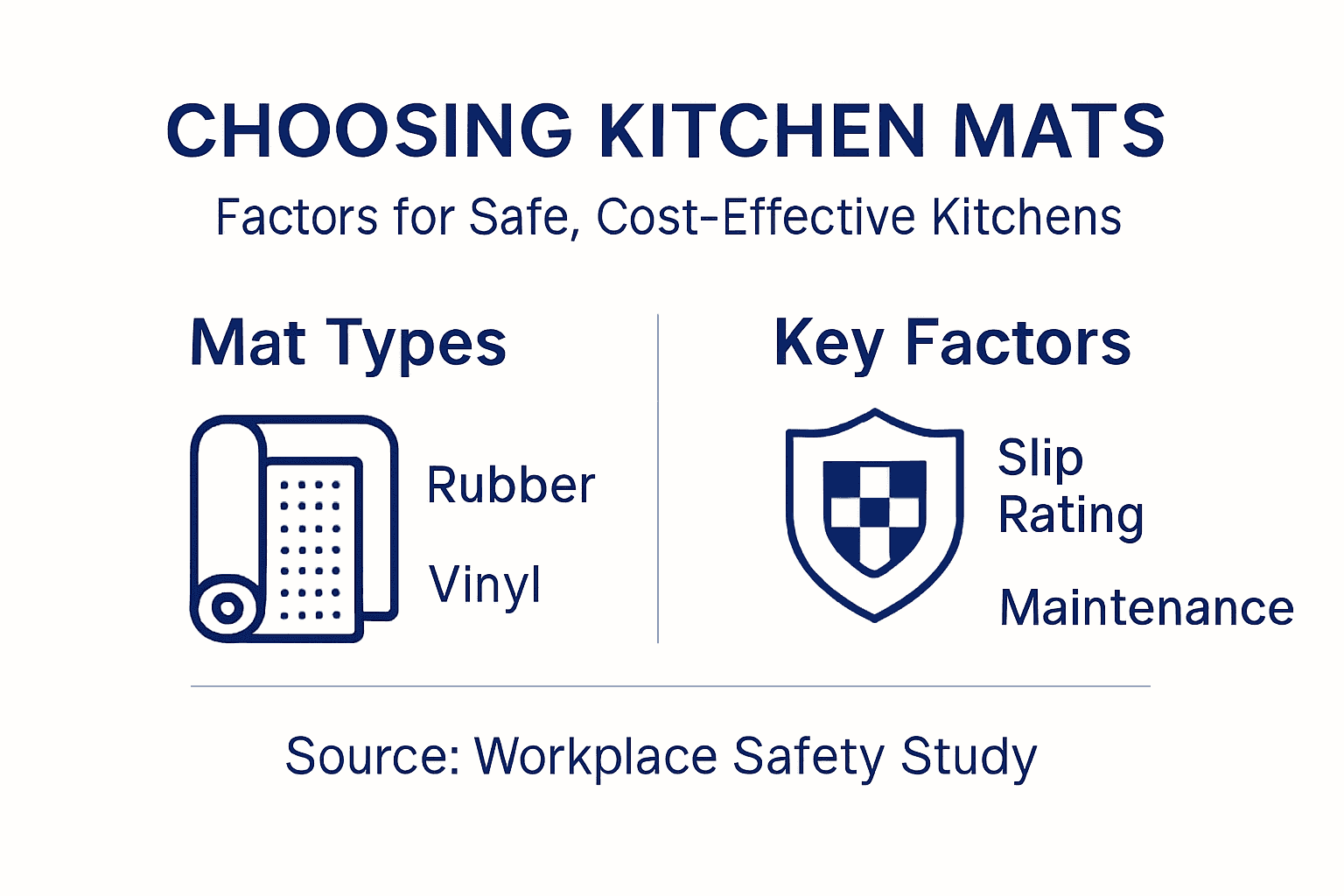
Selecting the optimal slip resistant mat involves analyzing specific workplace conditions, including surface type, contamination risks, and expected foot traffic. Factors such as material composition, drainage capabilities, and ergonomic design play crucial roles in determining a mat’s effectiveness and overall value proposition.
Pro tip: Conduct a comprehensive cost-benefit analysis that includes potential injury prevention, maintenance expenses, and projected lifespan when selecting slip resistant mats for your facility.
Enhance Kitchen Safety with High-Quality Slip Resistant Mats
Slip resistant kitchen mats are essential for reducing injuries and minimizing costly accidents in busy commercial kitchens. This article highlights critical challenges like liquid spills, grease exposure, and worker fatigue that increase risk. At Mats4U, we understand the need for mats that combine durability, ergonomic support, and effective liquid channeling to provide safer walking and standing surfaces. Whether you need rubber drainage mats or specialized anti-fatigue mats, our collection addresses these key pain points to protect your team and reduce liability.
Discover our wide range of Commercial Mats designed specifically for high-traffic industrial environments. For enhanced worker comfort and accident prevention, explore our premium Anti-Fatigue Mats. With competitive pricing and free delivery on orders over $100, Mats4U is the trusted choice for businesses committed to safety. Take the first step toward a safer kitchen by browsing our selection today at https://mats4u.com and equip your workspace with the slip resistant solutions it deserves.
Frequently Asked Questions
What are slip resistant kitchen mats?
Slip resistant kitchen mats are specialized floor coverings designed to prevent slips and falls in commercial kitchens. They feature unique textures and materials that enhance traction, particularly in areas prone to liquid spills.
How do slip resistant mats prevent accidents in the kitchen?
Slip resistant mats improve workplace safety by providing enhanced traction, channeling liquids away from walking surfaces, reducing worker fatigue with ergonomic support, and improving visibility in hazard zones through strategic colors.
What factors should I consider when choosing a slip resistant mat?
Consider factors such as the type of environment (wet or dry), potential contaminants (oils or cleaning solvents), specific foot traffic patterns, and the ergonomic needs for worker comfort when selecting a slip resistant mat.
How often should slip resistant mats be inspected and maintained?
Slip resistant mats should be inspected monthly for wear patterns, edge integrity, and surface texture. Additionally, develop a cleaning routine that includes daily debris removal and more thorough deep cleaning on a weekly basis to maintain their effectiveness.


