


Over one million American workers are injured each year in kitchen-related slip accidents, making safety a top concern in both homes and commercial spaces. Spilled liquids and fast-paced environments demand reliable solutions that truly work. Understanding the unique features and materials of non slip mats helps American kitchens create safer, more productive workplaces while minimizing the risk of costly accidents.
Table of Contents
- Defining Non Slip Mats For Kitchens
- Types Of Non Slip Kitchen Mats Explained
- Essential Safety Features And Material Choices
- Installation, Maintenance, And Compliance Requirements
- Risks, Costs, And Choosing Alternatives
Key Takeaways
| Point | Details |
|---|---|
| Importance of Non Slip Mats | Non slip mats are essential for preventing slips and falls in kitchens, offering safety features to protect workers from accidents. |
| Types of Kitchen Mats | Different types of non slip mats, such as anti-fatigue and absorbent mats, serve specific safety and comfort needs in workplace environments. |
| Material and Design Considerations | The choice of materials and design elements plays a crucial role in the effectiveness and durability of non slip mats in high-risk kitchen settings. |
| Maintenance and Compliance | Regular inspection and adherence to safety compliance standards are vital for ensuring long-term effectiveness of non slip kitchen mats. |
Defining Non Slip Mats for Kitchens
A non slip mat is a specialized surface covering designed to prevent accidental slips, trips, and falls in areas prone to liquid spills and hazardous conditions. According to Safeopedia, these mats are typically constructed from rubber materials engineered to provide superior traction in challenging environments like commercial and residential kitchens.
Kitchen non slip mats function through specialized surface textures and materials that create friction between footwear and the floor surface. These mats typically feature raised patterns, drainage channels, or unique surface geometries that help channel liquids away while maintaining grip. Key characteristics include:
- Textured rubber or synthetic surfaces
- Water-resistant materials
- Chemical and oil-resistant construction
- Beveled edges to prevent tripping
- Ability to withstand high-traffic areas
The primary purpose of non slip mats extends beyond simple floor coverage. They represent a critical safety intervention in workplace environments where potential slip hazards can lead to serious injuries. By creating a protective barrier between workers and potentially slick surfaces, these mats significantly reduce workplace accident risks and demonstrate a proactive approach to safety management.
Types of Non Slip Kitchen Mats Explained
Kitchen environments require specialized floor protection, and various non slip mat types serve distinct safety and functional purposes. These mats are engineered to address specific workplace challenges, ranging from reducing slip hazards to providing ergonomic support for workers who spend extended periods standing.
The primary categories of non slip kitchen mats include:
- Anti-Fatigue Mats: Designed to reduce physical strain for workers standing for long periods
- Safety Mats: Specifically engineered to minimize slip and fall risks
- Absorbent Mats: Quickly capture liquid spills to prevent surface contamination
- Oil-Resistant Mats: Specialized for environments with potential grease or oil exposure
Kitchen mats go beyond simple floor coverings. Different rubber and synthetic materials provide unique benefits, such as chemical resistance, drainage capabilities, and enhanced traction. Professional kitchens particularly benefit from mats with raised textures, beveled edges, and advanced grip technologies that help workers maintain stability even in high-moisture or greasy conditions.

The selection of an appropriate non slip kitchen mat depends on specific workplace requirements. Factors like foot traffic, potential liquid exposure, standing duration, and specific industry regulations all influence the ideal mat choice. Restaurants, commercial kitchens, and food preparation areas each demand nuanced mat solutions that balance safety, comfort, and operational efficiency.
Essential Safety Features and Material Choices
When selecting non slip kitchen mats, understanding critical slip resistance guidelines becomes paramount for workplace safety. Safety features extend far beyond simple surface texture, encompassing complex engineering design that addresses multiple potential hazards in high-risk kitchen environments.
Key safety features for kitchen mats include:
- Drainage Channels: Prevent liquid accumulation
- Beveled Edges: Reduce tripping risks
- Raised Surface Patterns: Enhance grip and traction
- Chemical Resistance: Withstand cleaning solutions and food-related spills
- Temperature Tolerance: Maintain performance under varying kitchen conditions
Material selection plays a crucial role in mat performance and durability. Synthetic rubber, nitrile compounds, and specialized polymer blends offer distinct advantages in different kitchen settings. Professional environments require materials that can withstand constant exposure to moisture, temperature fluctuations, and aggressive cleaning protocols.
Workplace safety standards increasingly demand comprehensive mat solutions that integrate multiple protective elements. By combining advanced material science with ergonomic design principles, modern non slip kitchen mats provide a critical layer of protection that reduces workplace injury risks and enhances overall operational efficiency. The right mat is not just a floor covering, but a strategic safety investment for any commercial kitchen environment.
Installation, Maintenance, and Compliance Requirements
Professional kitchen environments demand rigorous floor safety protocols that extend beyond simple mat placement. Proper installation requires meticulous attention to surface preparation, ensuring that non slip mats create a seamless safety barrier without introducing additional tripping hazards.
Key installation and maintenance considerations include:
- Surface Preparation: Clean and dry substrate before mat placement
- Alignment: Ensure full contact with floor surface
- Edge Management: Secure mat edges to prevent curling or lifting
- Regular Inspection: Check for wear, damage, or deterioration
- Cleaning Protocols: Implement systematic cleaning schedules
Compliance requirements vary across different industries, but most professional kitchens must adhere to specific safety standards. Workplace safety regulations typically mandate non slip floor coverings that meet minimum traction coefficients, resist chemical degradation, and maintain structural integrity under high-stress conditions. Organizations must document mat condition, replacement schedules, and maintenance procedures to demonstrate ongoing commitment to worker safety.
Successful mat management transcends simple installation. It represents a comprehensive approach to workplace risk mitigation, combining proactive maintenance, regular assessment, and strategic replacement strategies. By treating non slip mats as critical safety infrastructure, kitchen managers can significantly reduce potential workplace accidents and maintain a robust safety culture.
Risks, Costs, and Choosing Alternatives
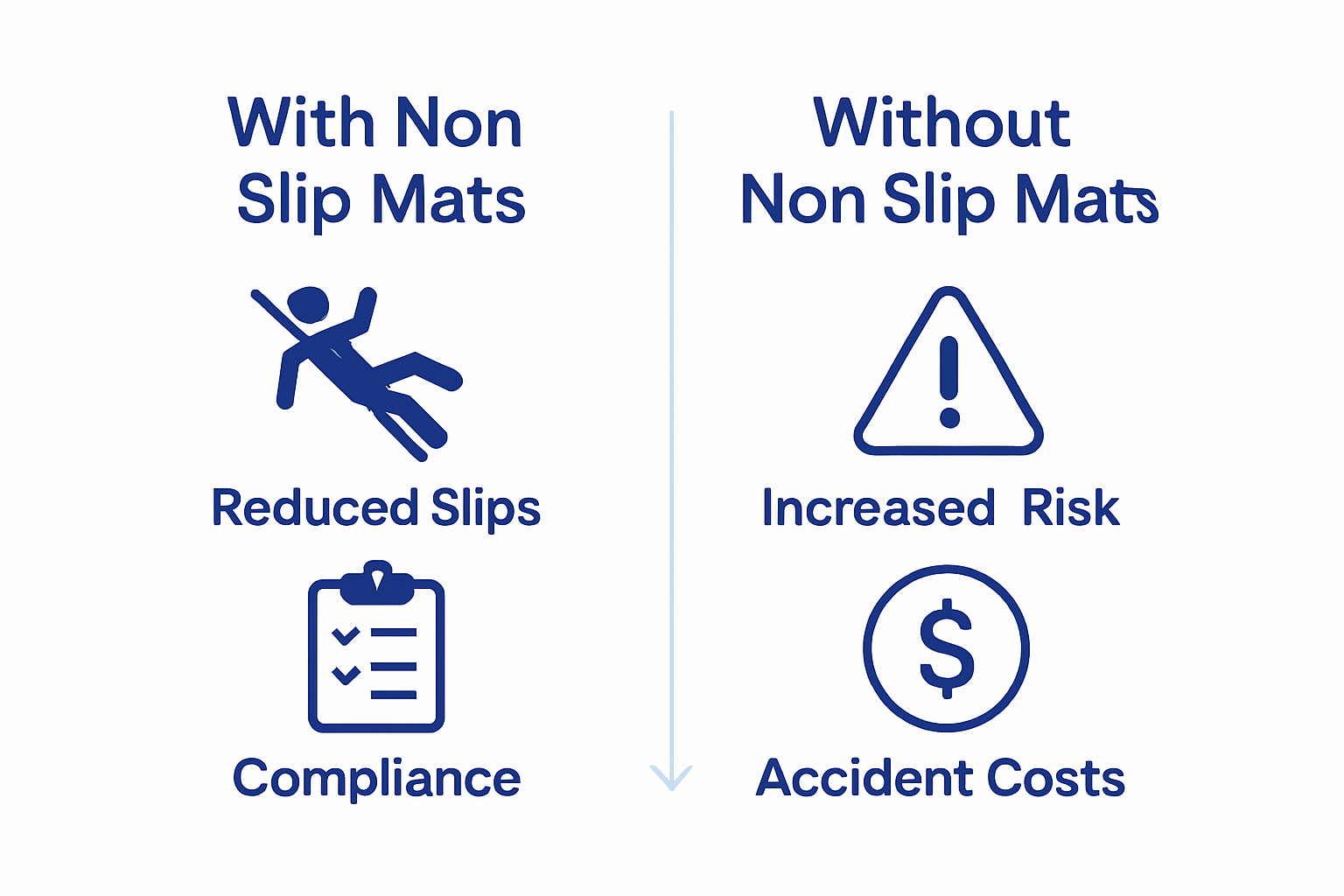
Evaluating non slip kitchen mats requires a comprehensive understanding of comparative material performance and cost implications. Organizations must weigh potential workplace risks against the financial investment required for effective safety solutions.
Key risk assessment factors include:
- Direct Injury Costs: Potential worker compensation claims
- Replacement Frequency: Long-term durability and maintenance expenses
- Performance Degradation: Material breakdown under harsh kitchen conditions
- Installation Complexity: Additional labor costs for proper mat implementation
- Compliance Penalties: Potential regulatory fines for inadequate safety measures
Alternative flooring options range from specialized epoxy coatings to textured ceramic tiles, each presenting unique advantages and limitations. Comprehensive rug and mat evaluations reveal that no single solution fits all kitchen environments. Professional facility managers must conduct detailed risk assessments, considering factors like foot traffic, potential liquid exposure, temperature variations, and specific workplace safety regulations.
Ultimately, the most cost-effective approach involves selecting materials that balance immediate safety requirements with long-term durability. While initial investments might seem substantial, preventing workplace accidents generates significant financial and human capital savings. Smart organizations view non slip floor solutions not as expenses, but as strategic investments in workforce protection and operational continuity.
Enhance Kitchen Safety with Expert Non Slip Mat Solutions
Kitchens are high-risk environments where slips and falls can lead to serious injuries and costly downtime. This article highlights critical challenges such as maintaining proper traction, compliance with safety standards, and reducing worker fatigue. If you want to safeguard your staff and comply with regulations, choosing the right non slip mats is essential. Key features like textured surfaces, chemical resistance, and beveled edges make all the difference in preventing accidents and sustaining daily kitchen operations.
At Mats4U, we specialize in providing durable, high-quality floor safety products designed specifically for commercial and industrial use. Explore our extensive collection of Non Slip mats tailored to combat slippery kitchen floors while improving comfort and compliance. For broader application, our Commercial Mats offer reliable options that withstand heavy foot traffic and harsh cleaning routines. Investing in the right mat now can substantially reduce injury risks and operational costs.
Don’t wait for accidents to happen. Visit Mats4U.com today to find the perfect non slip kitchen mat solution that meets your safety and compliance needs. Take the proactive step towards a safer work environment with mats that deliver performance and peace of mind.
Frequently Asked Questions
What are non slip mats for kitchens?
Non slip mats are specialized surface coverings designed to prevent slips and falls in areas like kitchens. They are made from rubber materials that enhance traction on potentially slick surfaces, providing safety in both commercial and residential settings.
What types of non slip mats are available for kitchen environments?
The main types of non slip mats for kitchens include anti-fatigue mats, safety mats, absorbent mats, and oil-resistant mats. Each type serves specific purposes, such as reducing slip hazards, providing ergonomic support, or quickly capturing spills.
What are the essential safety features to look for in non slip kitchen mats?
Key safety features include drainage channels to prevent liquid accumulation, beveled edges to reduce tripping risks, raised surface patterns for enhanced grip, chemical resistance, and temperature tolerance to maintain performance in various kitchen conditions.
How should non slip kitchen mats be maintained for safety compliance?
Proper maintenance involves cleaning the mats regularly, ensuring they are securely placed without curling edges, inspecting them for wear and damage, and adhering to industry compliance standards regarding slip resistance and material integrity.
Recommended
- Understanding Non Slip Restaurant Mats for Safety – Mats4U USA
- The Essential Guide to Choosing the Best Commercial Kitchen Mats for S – Mats4U USA
- Understanding Anti Slip Mats for Wet Areas: Safety Matters – Mats4U USA
- Top Picks for the Best Kitchen Floor Mats in 2024 – Mats4U USA
- Understanding Dog Safety at Home: Essential Insights – iPupPee


