


Wet floors in hospitality settings can turn a busy shift into a costly accident in seconds. For facility managers across the United States, choosing the right rubber floor mat is more than a maintenance task. It is about keeping guests and staff safe while meeting strict OSHA requirements. This article explains how the best mats offer slip resistance, drainage, and durability to reduce risks and maintain clean, appealing spaces even during your busiest hours.
Table of Contents
- What Defines Rubber Floor Mats For Wet Areas
- Primary Types Used In Hospitality Facilities
- Performance Features Supporting Safety And Cleanliness
- Industry Standards And Safety Regulations In The Us
- Common Pitfalls And Long-Term Cost Considerations
Key Takeaways
| Point | Details |
|---|---|
| Slip Resistance is Essential | Ensure mats have a textured surface to prevent slips, especially in high-moisture areas. |
| Quality and Durability Matter | Invest in mats that withstand frequent cleaning and heavy foot traffic to reduce long-term costs. |
| Proper Drainage Design is Key | Choose mats with drainage capabilities to prevent water pooling and enhance safety. |
| Compliance with OSHA Standards | Select mats that meet OSHA regulations to mitigate liability risks in hospitality environments. |
What Defines Rubber Floor Mats for Wet Areas
Rubber floor mats for wet areas are specialized flooring solutions built to handle environments where moisture, spills, and foot traffic create constant slip hazards. These mats serve a single, critical purpose: preventing accidents before they happen. In hospitality settings, where guests move through lobbies, bathrooms, kitchens, and pool areas, the right mat becomes your first line of defense against liability claims and injuries.
The defining characteristic of these mats is their slip-resistant surface. Unlike standard rubber mats, wet area mats feature textured tops designed to maintain grip even when saturated with water or covered in soap residue. Walking surfaces in wet areas must provide high visibility through contrasting colors and materials that offer both safety and comfort. This combination means guests can walk confidently from the shower area to their room or from the kitchen to the dining room without losing their footing.
A quality rubber mat for wet areas must absorb and contain moisture. The underside typically features a backing that prevents water from pooling beneath the mat, while the top layer actively wicks moisture away from the surface. This design keeps your floors dry to the extent feasible, which is exactly what OSHA standards require for workplace safety. You’re not just placing a mat down; you’re creating a drainage system that tracks moisture and dirt away from foot traffic zones.
Durability separates premium mats from budget alternatives. Hospitality environments demand mats that withstand constant cleaning, rolling carts, and heavy footfall. Quality rubber mats resist wear, maintain their grip over time, and don’t curl or bubble at the edges. They should handle commercial-grade disinfectants and frequent washing without degrading.
Thickness and cushioning matter more than you might expect. A mat that’s too thin forces staff to stand on hard floors for hours, increasing fatigue and reducing service quality. Proper cushioning provides ergonomic support while maintaining the grip you need for safety. This balance between comfort and safety defines truly effective wet area mats.
Pro tip: Test your mats quarterly by walking across them in socks after spraying with water. If you slip, it’s time to replace them. Worn textured surfaces lose their slip-resistance, creating the exact hazard you’re trying to prevent.
Primary Types Used in Hospitality Facilities
Hospitality facilities have three primary options when selecting rubber floor mats for wet areas, each serving different operational needs. Understanding the differences helps you choose the right solution for your specific spaces and guest traffic patterns. The choice between these types affects everything from maintenance schedules to long-term replacement costs.
Sheet rubber flooring creates a seamless, hygienic surface that leaves no gaps for water or debris to hide beneath. This style works exceptionally well in kitchens, bathrooms, and shower areas where continuous water exposure is the norm. The seamless design means faster cleaning and no tripping hazards at seams. Installation requires professional fitting, but once in place, you get years of reliable protection without the maintenance headaches of modular systems.
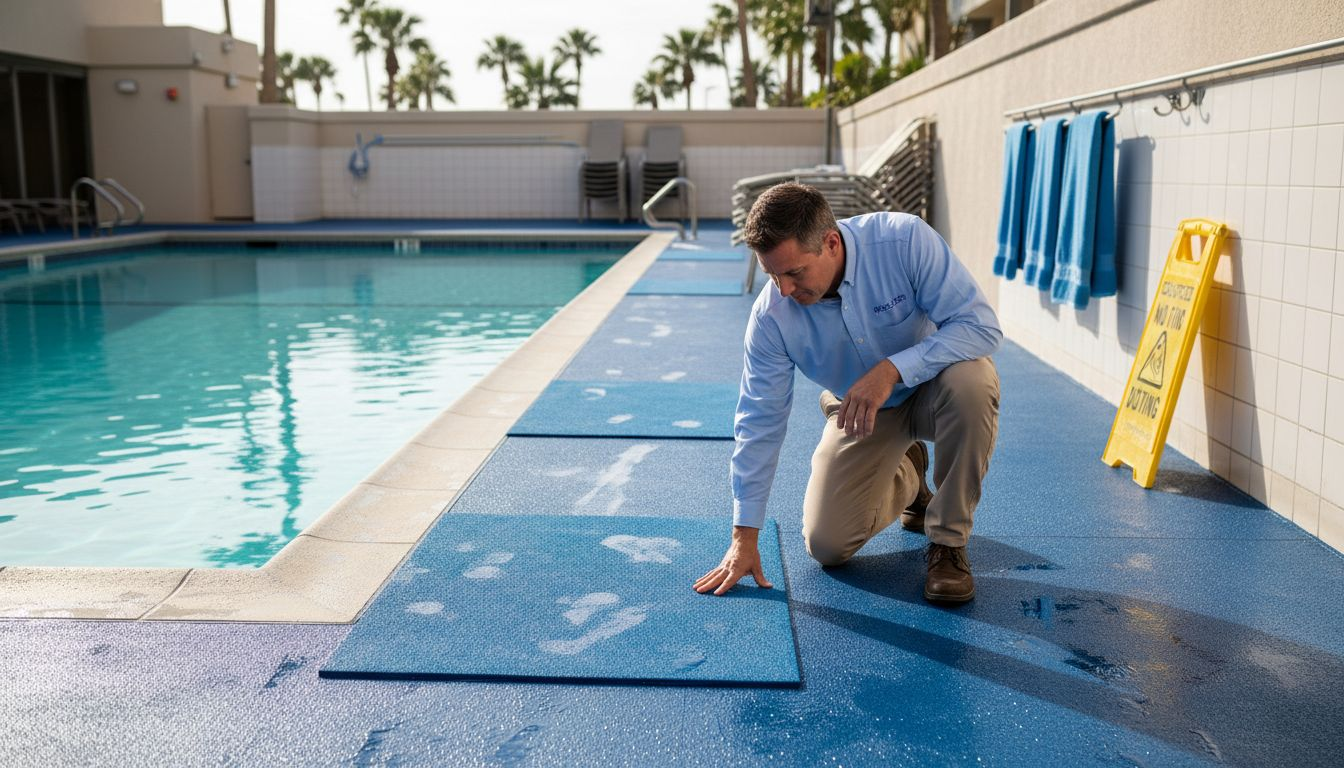
Rubber tiles offer flexibility that sheet rubber cannot match. You can replace individual tiles if damage occurs rather than replacing an entire mat or floor section. These tiles provide excellent shock absorption, which reduces fatigue for your kitchen and housekeeping staff during long shifts. They also allow for creative layout patterns and color combinations that enhance your facility’s design while maintaining safety standards.
Interlocking rubber mats are the workhorses of hospitality spaces. Nonslip rubber mats with drainage holes provide easy installation without permanent attachment, making them ideal for service areas and temporary setups. You can rearrange them, move them between facilities, or swap out worn sections quickly. This portability means less downtime and faster response to changing operational needs.
The best choice depends on your priorities. If hygiene and seamless surfaces are critical, sheet rubber wins. If flexibility and partial replacement matter more, tiles serve you better. For high-traffic zones requiring quick setup and easy reconfiguration, interlocking mats deliver the functionality you need without the permanent installation commitment.
Here is a comparison of the main types of rubber floor mats for wet areas in hospitality environments:
| Type | Key Benefit | Best Use Case | Maintenance Requirement |
|---|---|---|---|
| Sheet Flooring | Seamless hygiene | High-moisture rooms | Professional cleaning, rare replacement |
| Rubber Tiles | Replace sections | Busy kitchens, varied spaces | Replace damaged tiles as needed |
| Interlocking Mats | Quick install, portable | Temporary setups, changing layouts | Regular inspection and repositioning |
Pro tip: Start with interlocking mats in pilot areas to test performance and traffic patterns before committing to permanent installations like sheet flooring or tiles.
Performance Features Supporting Safety and Cleanliness
Rubber floor mats for wet areas succeed because they combine multiple performance features that work together to prevent accidents and maintain hygiene. No single feature accomplishes this alone. The best mats bring all these elements together in one cohesive product that protects guests and staff.
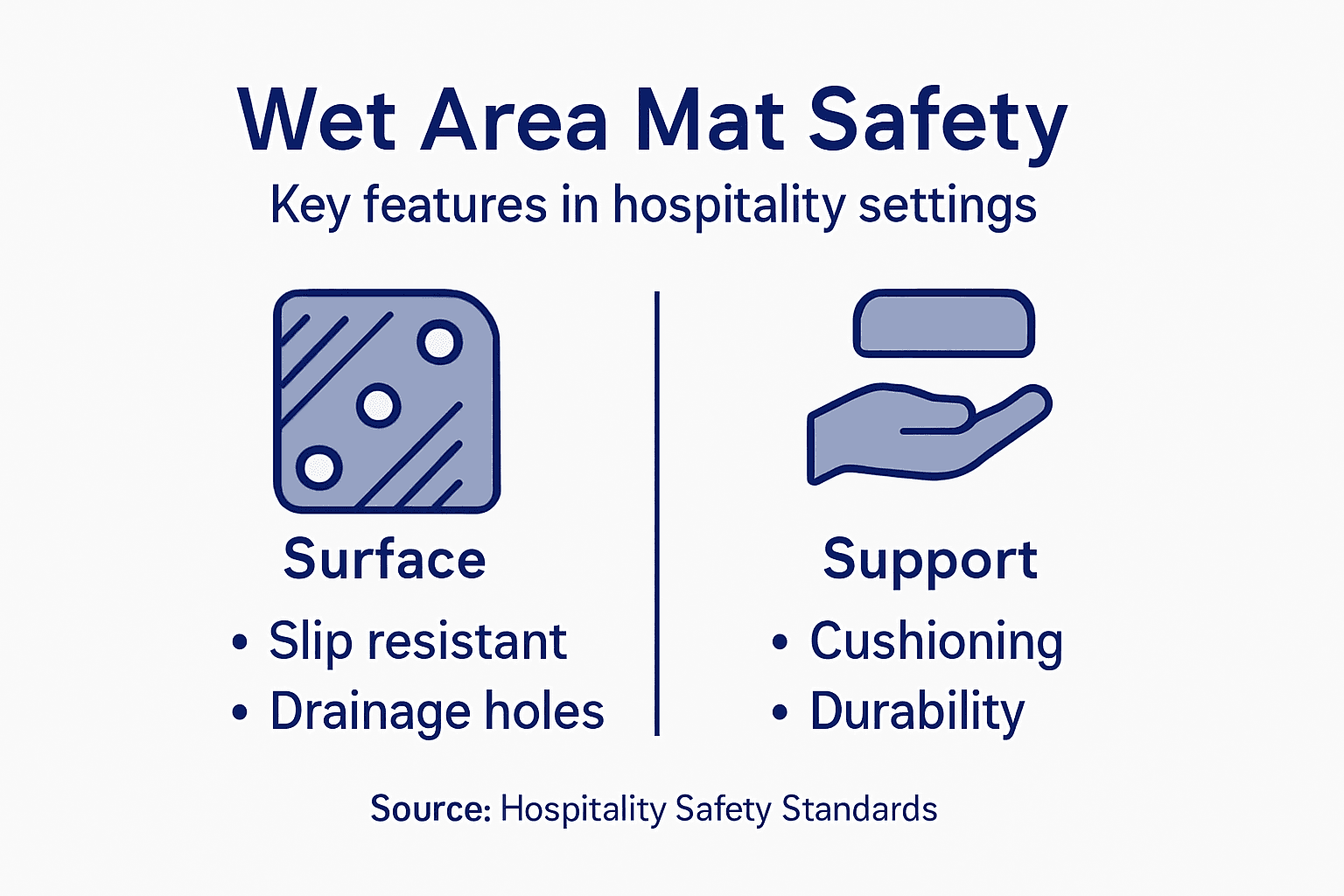
Slip resistance is the foundation of wet area safety. The textured surface patterns catch water and moisture, preventing the slips that occur on bare flooring. Slip resistance prevents falls by maintaining traction even when saturated. Your guests walking from the bathroom to their room, or your kitchen staff moving between stations, need that consistent grip underfoot. Without it, you’re inviting the exact accidents your mats are meant to prevent.
Drainage capabilities separate quality mats from inferior ones. Mats with drainage holes or channels underneath allow water to flow through rather than pooling beneath the surface. This design prevents the mat from becoming slippery itself and stops water from accumulating in areas where guests could splash or trip. It also extends the mat’s lifespan by preventing moisture damage to the backing material.
Cushioning and support matter more than facility managers often realize. Standing for hours on hard floors exhausts your team. Quality cushioning reduces fatigue, which means fewer mistakes, better guest service, and lower staff turnover. This ergonomic benefit improves your bottom line while making your facility a better place to work.
Visual contrast and visibility reduce trip hazards in unexpected ways. Mats with contrasting colors make transitions between flooring types obvious. This prevents the dangerous moment when guests misjudge where the mat ends and bare floor begins. Clear visibility also helps with cleaning verification. You can see dirt and debris rather than wondering what’s hidden beneath.
Chemical and wear resistance keep mats performing through constant cleaning cycles. Commercial disinfectants, floor cleaners, and daily scrubbing wear down inferior products quickly. Quality rubber withstands these conditions for years while maintaining its grip and structural integrity.
Pro tip: Test mat drainage by pouring water directly onto the surface during setup. Quality mats should allow water to pass through within seconds, not pool on top.
Industry Standards and Safety Regulations in the US
Compliance with safety regulations is not optional. As a facility manager, you face real liability when wet area accidents occur in your hospitality space. Understanding the regulatory landscape helps you make informed decisions about rubber floor mats and protect your business from legal exposure.
OSHA 1910.22 is the federal standard that directly impacts your mat selection and maintenance. This regulation requires walking-working surfaces kept clean and dry to the extent feasible, with proper drainage in areas where wet processes occur. Your rubber mats are not just nice to have. They are compliance tools that fulfill this federal requirement. OSHA explicitly states that employers must maintain drainage and provide dry standing places like mats in wet environments to prevent accidents. Failure to comply can result in citations and fines.
The standard applies across all hospitality settings where water exposure is common. Kitchen areas, bathrooms, pool surrounds, and shower rooms all fall under this requirement. You must demonstrate that your facility takes slip prevention seriously through proper mat selection and maintenance documentation.
Signage standards work alongside your mat strategy. OSHA references ANSI/NEMA Z535 series guidelines for hazard alert signs in wet areas. While signage is important, it only works when combined with effective slip-resistant surfaces. A wet floor sign without a quality mat provides false security. The mat does the actual safety work by preventing slips before they happen.
Different hospitality sectors face varying compliance pressures. Hotels with pools must meet specific standards for pool deck areas. Restaurants face scrutiny around kitchen slip-and-fall incidents. Gyms with locker rooms and showers require documented safety measures. Your mat choice becomes part of your compliance documentation.
Liability extends beyond regulatory compliance. If a guest slips and claims your facility failed to provide safe walking surfaces, your insurance company will examine whether you used appropriate slip-resistant mats. Quality mats with proper maintenance records demonstrate due diligence and strengthen your legal position.
Pro tip: Maintain dated documentation of mat installation, maintenance schedules, and replacement. This record proves regulatory compliance during inspections or liability disputes.
Common Pitfalls and Long-Term Cost Considerations
Many facility managers make mat decisions based solely on upfront price. This approach often costs significantly more in the long run through increased injuries, worker compensation claims, and frequent replacements. Understanding the true cost of ownership helps you make smarter purchasing decisions that protect both your budget and your facility.
Insufficient cushioning is a widespread mistake that drains your bottom line. Thin, hard mats force your kitchen and housekeeping staff to stand on unforgiving surfaces for hours. This leads to foot pain, back issues, and worker fatigue that translates into higher turnover and reduced service quality. Staff members performing their best work need proper support underfoot. Investing in cushioned mats reduces healthcare costs and improves retention.
Poor drainage design creates ongoing safety problems. Mats lacking adequate drainage allow water to pool beneath the surface, which actually increases slip risk over time. Water sitting under the mat weakens the backing material, leading to premature deterioration and replacement cycles. You end up replacing mats more frequently than necessary, multiplying your costs.
Low visibility and poor contrast surfaces create trip hazards that facilities often overlook. Mats that blend into surrounding flooring create dangerous visual transitions where guests misjudge where solid floor ends and the mat begins. This simple design flaw directly correlates with fall incidents and liability claims.
Material quality matters more than initial cost suggests. Budget rubber mats deteriorate quickly under commercial disinfectants and frequent cleaning. They lose slip resistance faster, become brittle at seams, and curl at edges within months. Quality mats resist these conditions for years. The comparison is stark: a $200 mat replaced annually costs more than a $600 mat lasting five years while maintaining safety performance throughout its lifespan.
Long-term cost analysis reveals that maintenance accessibility determines true affordability. Interlocking tile systems allow you to replace worn sections rather than entire installations, spreading costs over time. Seamless sheet flooring requires full replacement but eliminates seam maintenance issues. Calculate your five year total cost including replacement frequency, not just unit price.
Use this summary to review factors that impact the total cost of rubber floor mats over time:
| Cost Factor | Short-Term Impact | Long-Term Impact |
|---|---|---|
| Upfront Price | Lower cost initially | Often leads to frequent replacement |
| Cushioning Quality | Reduces staff fatigue | Higher retention, fewer injuries |
| Drainage Design | Prevents surface pooling | Extends mat lifespan |
| Material Durability | Minimizes early wear | Saves on annual replacements |
Pro tip: Request durability documentation from manufacturers and ask about chemical resistance specific to your cleaning products before purchasing.
Protect Your Facility with Durable Rubber Floor Mats for Wet Areas
Managing wet environments in hospitality settings demands more than just any mat. You need reliable solutions that offer slip resistance, effective drainage, and lasting durability to keep guests and staff safe while meeting OSHA standards. At Mats4U.com, we understand these challenges and provide a wide selection of Commercial Mats designed specifically for high-traffic, wet areas that prevent slips and reduce fatigue through superior cushioning and material quality.
Don’t wait until wear or accidents force costly replacements or claims. Explore our Non Slip mat options to find textured surfaces that maintain grip even when wet. Combined with our competitive pricing and free delivery on orders over $100, Mats4U.com gives you trusted American-made mats that support safety, hygiene, and regulatory compliance right now. Visit Mats4U.com to secure the right mats for your facility and ensure a safer environment today.
Frequently Asked Questions
What are rubber floor mats for wet areas?
Rubber floor mats for wet areas are specialized mats designed to prevent slips and falls in environments where moisture is common, such as kitchens, bathrooms, and pool areas. They feature slip-resistant surfaces, moisture absorption, and durability to enhance safety and hygiene.
How do I choose the right type of rubber floor mat for my hospitality facility?
Consider your specific operational needs. Sheet rubber flooring offers seamless hygiene for high-moisture areas; rubber tiles provide flexibility and easy replacements; and interlocking mats allow for quick installation and portability. Choose based on factors like traffic patterns, maintenance requirements, and hygiene needs.
How can I maintain the slip resistance of rubber floor mats?
To maintain slip resistance, regularly inspect the mats for wear, clean them according to the manufacturer’s recommendations, and test their grip quarterly. If you notice decreased traction, it may be time to replace them to ensure safety.
What regulations do I need to consider when using rubber floor mats?
You must comply with OSHA 1910.22, which requires walking-working surfaces to be kept clean and dry. Proper drainage and slip-resistant mats help meet this federal standard, minimizing the risk of accidents and liability in wet areas.
Recommended
- Rubber Mats for Wet Areas: Safety First Solutions – Mats4U USA
- Understanding Mats for Wet Areas: Importance and Functionality – Mats4U USA
- Understanding Non Slip Floor Mats for Wet Areas – Mats4U USA
- Outdoor Mats for Wet Areas: Boosting Workplace Safety – Mats4U USA
- June is National Safety Month: Essential Emergency Lighting Products | LED Supply & Fit


