


Slippery kitchen floors in busy restaurant or hospitality settings can quickly turn routine tasks into dangerous situations. Facility and property managers across the United States know the risks that come with spills, oils, and constant foot traffic in commercial kitchens. Choosing the right non slip kitchen mats not only helps prevent costly accidents but also provides comfort for staff who spend hours on their feet, making these mats essential for a safer, more productive work environment.
Table of Contents
- Defining Non Slip Kitchen Mats For Safety
- Types Of Non Slip Kitchen Mats Compared
- Essential Safety And Durability Features
- Maintaining Mats For Optimal Slip Resistance
- Common Mistakes In Choosing Kitchen Mats
Key Takeaways
| Point | Details |
|---|---|
| Importance of Non Slip Mats | Non slip kitchen mats are essential for preventing slips and falls in commercial kitchens by enhancing traction and stability in high-risk areas. |
| Types of Non Slip Mats | Understanding the different types of non slip mats helps address specific safety and ergonomic needs, improving workplace safety. |
| Maintenance is Crucial | Regular maintenance and inspections are necessary to ensure mats retain their slip-resistant properties and prevent workplace accidents. |
| Avoid Common Mistakes | Facility managers should prioritize quality and specific environmental conditions when selecting kitchen mats to enhance safety and durability. |
Defining Non Slip Kitchen Mats for Safety
Non slip kitchen mats represent a critical safety solution for commercial environments where floor hazards can lead to serious workplace accidents. These specialized floor coverings are engineered to provide superior traction and stability in high-risk areas prone to moisture, grease, and other slippery substances.
Commercial kitchen environments demand robust safety measures, and non slip mats offer critical protection against potential workplace injuries. These mats are specifically designed to address multiple safety challenges:
- Improve floor traction in wet or greasy conditions
- Reduce worker fatigue by providing cushioned support
- Minimize slip and fall risks in high-traffic areas
- Create a more stable walking surface for kitchen personnel
The primary function of non slip kitchen mats goes beyond simple floor covering. They are sophisticated safety tools that integrate multiple protective features. Traction technology is the cornerstone of their design, utilizing specialized surface textures and materials that grip footwear and resist sliding, even when exposed to liquids or oils.
Materials used in manufacturing these mats are carefully selected to withstand harsh commercial kitchen environments. Typical construction involves resilient synthetic rubber or advanced polymer compounds that maintain flexibility while providing exceptional grip. These materials are engineered to resist chemical exposure, temperature variations, and constant foot traffic.
Pro tip: Always inspect kitchen mats quarterly for wear and replace them immediately if surface traction diminishes to maintain optimal workplace safety.
Types of Non Slip Kitchen Mats Compared
Commercial kitchens require specialized floor protection, and understanding the various types of safety mats is crucial for creating a secure workplace environment. Each mat type serves a unique purpose, addressing specific safety challenges and ergonomic needs in high-risk food preparation areas.
The primary categories of non slip kitchen mats include:
- Pressure-Sensitive Mats: Designed to detect potential hazards and alert workers
- Anti-Fatigue Mats: Provide cushioning and support for workers standing for extended periods
- Standard Non-Slip Mats: Offer basic traction in wet or greasy conditions
- Specialty Mats: Include heat-resistant and electrically insulating options for specific workplace requirements
Pressure-Sensitive Mats represent an advanced safety technology that goes beyond traditional floor coverings. These intelligent mats can detect unusual pressure patterns, potentially indicating a slip or fall risk before an accident occurs. They are particularly valuable in environments with high worker movement and complex floor conditions.
Anti-fatigue mats offer a different approach to workplace safety, focusing on worker comfort and physical well-being. Constructed with specialized cushioning materials, these mats reduce stress on joints and muscles for workers who spend long hours standing in commercial kitchens. By minimizing physical strain, they indirectly contribute to overall workplace safety by reducing worker fatigue and potential accidents caused by exhaustion.
Here’s a concise comparison of common non slip kitchen mat types and their workplace benefits:
| Mat Type | Main Purpose | Workplace Benefit |
|---|---|---|
| Pressure-Sensitive | Detect hazards automatically | Proactively reduces accident risk |
| Anti-Fatigue | Cushion worker stance | Reduces physical exhaustion |
| Standard Non-Slip | Enhance surface traction | Prevents slips in moist areas |
| Specialty | Resist heat/electricity | Protects from unique threats |
Pro tip: Conduct a comprehensive workplace assessment to determine the most appropriate mat type for specific kitchen zones and potential hazards.
Essential Safety and Durability Features
Commercial kitchen mats must meet rigorous safety standards and regulations that ensure workplace protection and compliance. These standards are critically important for preventing workplace accidents and maintaining a secure environment for kitchen staff.
Key safety and durability features include:
- Thick cushioning to reduce worker fatigue
- Slip-Resistant Surfaces that perform in wet and oily conditions
- Beveled edges to minimize tripping hazards
- Chemical and temperature resistant materials
- Easy-to-clean surfaces for maintaining hygiene
Slip Resistance represents the most fundamental safety characteristic of commercial kitchen mats. Advanced mats utilize sophisticated surface textures and specialized compounds that maintain traction even when exposed to grease, water, and other potentially slippery substances. These design elements create a critical barrier against workplace accidents.
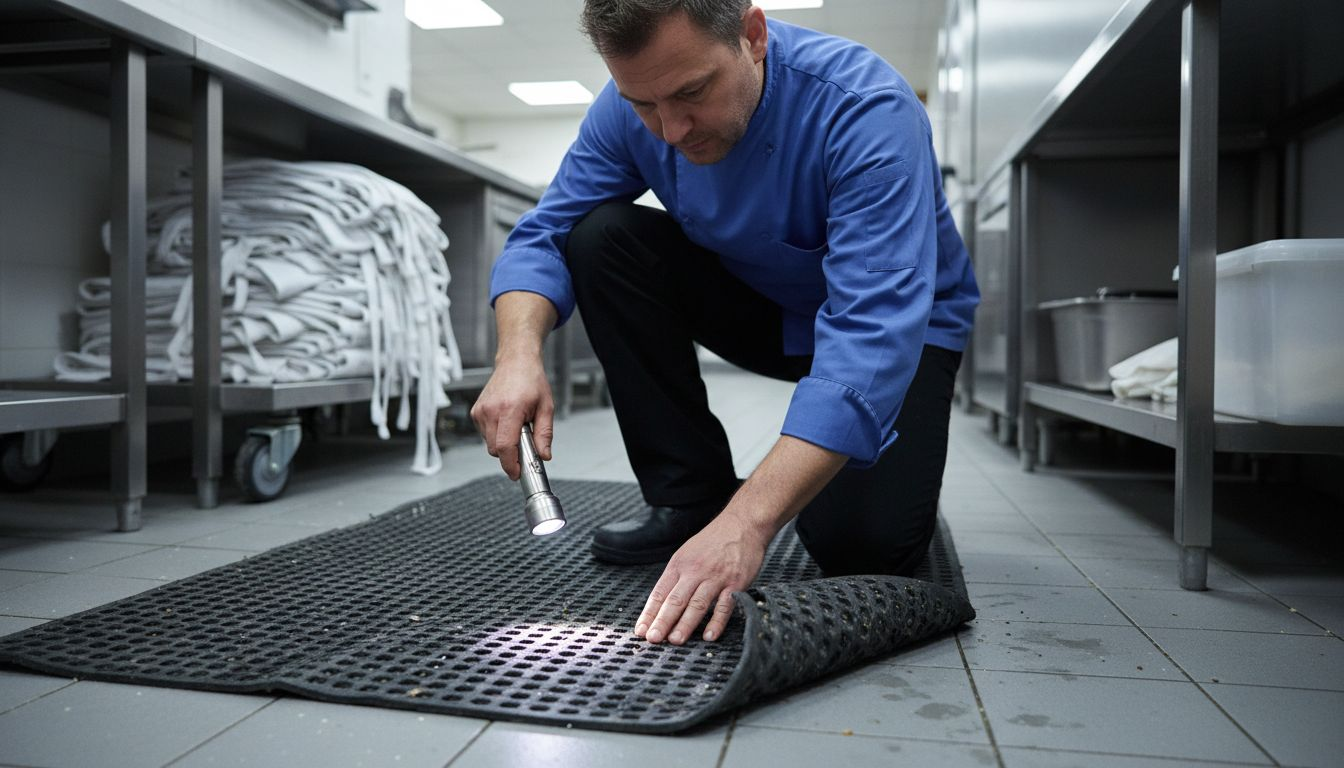
Durability is equally important in high-traffic kitchen environments. Mats must withstand constant foot traffic, frequent cleaning, exposure to harsh chemicals, and temperature variations. High-quality commercial mats are engineered with robust materials like synthetic rubber or advanced polymers that maintain structural integrity and performance characteristics over extended periods of continuous use.
This summary highlights vital kitchen mat safety features and their operational impact:
| Feature | How It Helps | Operations Impact |
|---|---|---|
| Beveled Edges | Prevents tripping | Safeguards busy pathways |
| Chemical Resistance | Withstands spills | Reduces replacement needs |
| Slip-Resistant Surface | Maintains traction | Consistent accident prevention |
| Thick Cushioning | Eases fatigue | Increases worker productivity |
| Easy Cleaning | Maintains hygiene | Supports food safety goals |
Pro tip: Perform quarterly mat inspections to assess surface integrity, checking for wear patterns, reduced traction, or material degradation that could compromise safety.
Maintaining Mats for Optimal Slip Resistance
Ensuring the ongoing effectiveness of commercial kitchen mats requires a systematic approach to mat maintenance and safety standards. Regular care and inspection are critical to preserving the slip-resistant properties that protect workers from potential accidents.
Key maintenance practices include:
- Daily cleaning to remove grease and debris
- Weekly thorough washing with appropriate cleaning solutions
- Monthly comprehensive surface inspections
- Immediate replacement of mats showing significant wear
- Proper storage when mats are not in use
Surface Integrity plays a crucial role in maintaining slip resistance. Over time, kitchen mats accumulate layers of grease, food particles, and cleaning chemical residues that can progressively compromise their traction. Professional kitchen staff must develop a consistent cleaning protocol that removes these potential hazards without damaging the mat’s specialized surface texture.
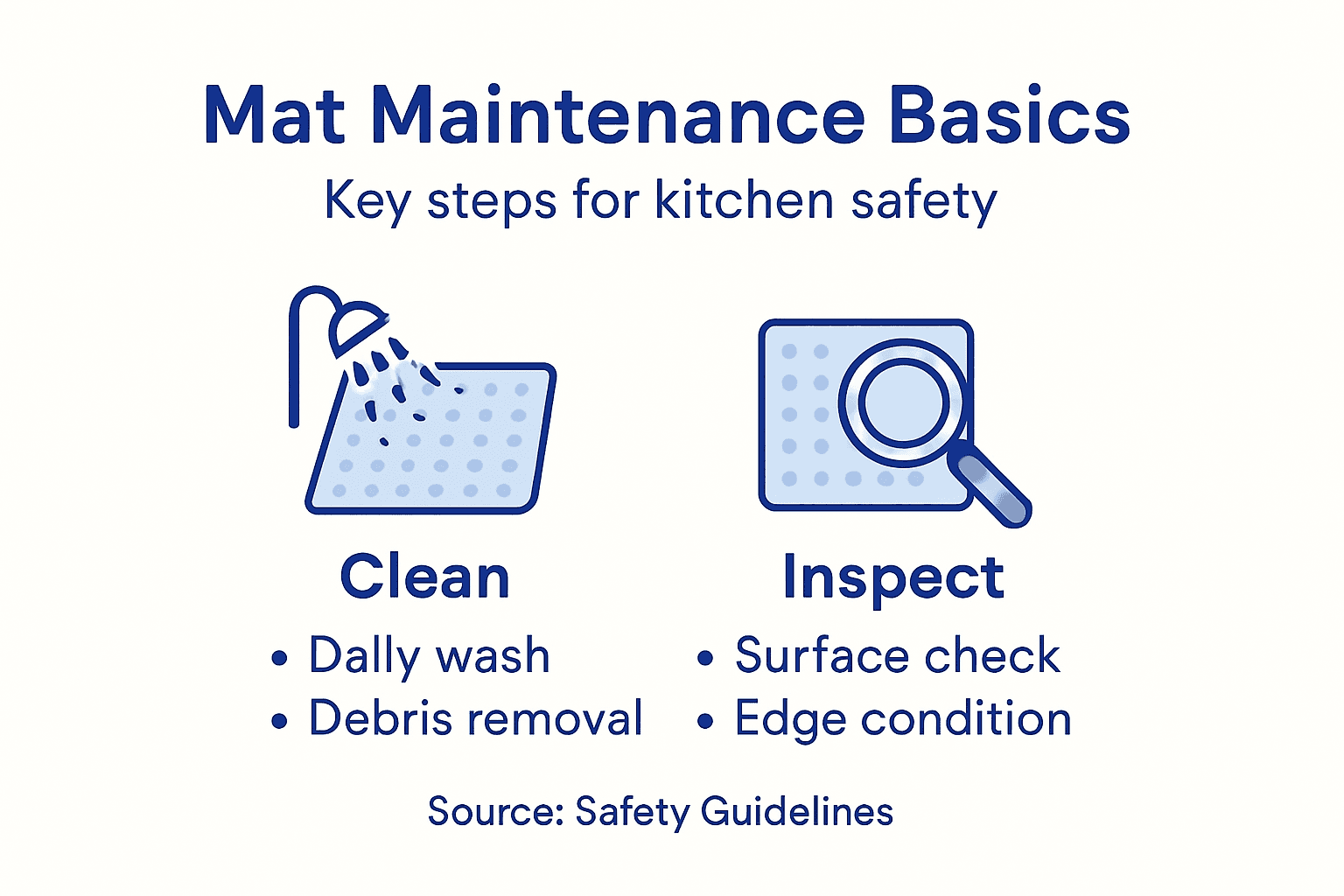
Inspection routines are essential for identifying potential safety risks before they become critical issues. This involves carefully examining mats for signs of wear such as smoothed surface textures, curled edges, or areas of material breakdown. Commercial kitchens should establish a standardized inspection checklist that documents the condition of each mat, tracking its performance and determining when replacement becomes necessary.
Pro tip: Create a dedicated maintenance log for each kitchen mat, recording cleaning dates, inspection findings, and replacement schedules to ensure consistent safety monitoring.
Common Mistakes in Choosing Kitchen Mats
Selecting the right kitchen mats requires careful consideration, and avoiding common selection errors can significantly impact workplace safety and operational efficiency. Facility managers frequently make critical mistakes that compromise mat performance and worker protection.
Key mistakes to avoid include:
- Prioritizing price over quality and safety features
- Selecting mats without considering specific kitchen environment conditions
- Ignoring material compatibility with cleaning chemicals
- Overlooking thickness and cushioning requirements
- Failing to assess mat edge design and potential tripping hazards
Material Selection represents one of the most crucial decision points in kitchen mat procurement. Many managers mistakenly choose mats based solely on initial cost, neglecting long-term durability and safety implications. High-quality mats constructed from specialized synthetic rubbers or advanced polymers might cost more initially but provide superior performance and longer service life.
Workplace-specific requirements demand nuanced mat selection strategies. Different kitchen zones - such as cooking areas, dishwashing stations, and preparation surfaces - require unique mat characteristics. Managers must consider factors like temperature exposure, moisture levels, chemical interactions, and specific slip resistance needs when making selections.
Pro tip: Conduct a comprehensive workplace assessment before purchasing kitchen mats, documenting specific environmental conditions and safety requirements to guide your selection process.
Secure Your Commercial Kitchen with the Right Non Slip Mats
Slippery floors and worker fatigue pose serious risks in busy commercial kitchens. The article highlights the critical need for non slip kitchen mats that deliver superior traction, durability, and ergonomic support to prevent accidents and improve staff comfort. Choosing mats with features like slip-resistant surfaces, beveled edges, and chemical resistance is essential for maintaining a safe workplace environment. The pain of unexpected falls or injuries can be avoided by investing in mats designed specifically for high-traffic kitchen zones.
At Mats4U, we understand these safety challenges and offer a wide selection of Commercial Mats tailored to protect your workforce and enhance kitchen productivity. For workers who stand for long shifts, our Anti-Fatigue Mats provide cushioned support to reduce exhaustion and prevent accidents related to fatigue. Every mat we offer is made in the USA with quality materials engineered to withstand harsh kitchen conditions.
Don’t wait until a slip leads to costly consequences. Explore our range of commercial safety mats today at Mats4U.com and take the first step toward creating a safer, more comfortable kitchen environment. Your staff and business deserve protection that lasts.
Frequently Asked Questions
What are non slip kitchen mats and why are they important?
Non slip kitchen mats are specialized floor coverings designed to provide traction and stability in commercial kitchens. They help prevent slips and falls in areas prone to moisture, grease, and other slippery substances, ensuring worker safety.
What types of non slip kitchen mats are available?
There are several types of non slip kitchen mats, including pressure-sensitive mats, anti-fatigue mats, standard non-slip mats, and specialty mats. Each type serves different purposes, such as detecting hazards, providing cushioning, or offering enhanced traction.
How should I maintain non slip kitchen mats for optimal safety?
To maintain non slip kitchen mats, regularly clean them to remove grease and debris, conduct thorough inspections to check for wear, and replace any mats that show significant signs of damage. Establishing a consistent maintenance log for tracking cleaning and inspection schedules is also recommended.
What features should I look for in a non slip kitchen mat?
When selecting a non slip kitchen mat, look for features such as slip-resistant surfaces, thick cushioning for fatigue reduction, beveled edges to prevent tripping, and durability against harsh chemicals and high temperatures. These features enhance workplace safety and efficiency.
Recommended
- Non Slip Kitchen Rugs – Boosting Safety in Busy Workspaces – Mats4U USA
- Anti Slip Kitchen Floor Mats: Ensuring Safety in Hospitality – Mats4U USA
- Non Slip Mats for Kitchens: Safety and Compliance Benefits – Mats4U USA
- Slip Resistant Mats Kitchen: Reducing Injuries and Costs – Mats4U USA
- Warehouse Safety Best Practices for Accident Prevention - ORNER
- Cow Slippers for Adults – Faux Fur Non Slip Plush Winter Footwear – Be Juliet


