


TL;DR:
- Mat durability depends on multi-layer construction, appropriate materials, and environmental stress factors. Recognizing predictable failure modes allows proactive maintenance, extending mats’ functional lifespan and ensuring safety. Tailoring mats and upkeep practices to specific environmental conditions maximizes longevity and cost efficiency.
Walk into any high-traffic facility and you’ll find mats that are curling at the edges, cracking along the backing, or sliding underfoot after just a year of use. The reason is rarely bad luck. Understanding what makes mats durable requires looking beyond simple material toughness claims to construction quality, environmental conditions, and failure patterns that are entirely predictable. This guide breaks down every factor that determines mat lifespan in commercial and industrial settings, so you can make purchasing decisions that hold up over time.
Table of Contents
- Key takeaways
- What makes mats durable: materials, construction, and stress
- Failure modes that predict mat lifespan
- Comparing mat materials for commercial use
- Practical tips for extending mat durability
- My take on what facility managers get wrong
- Durable mats for commercial facilities from Mats4u
- FAQ
Key takeaways
| Point | Details |
|---|---|
| Multi-layer construction matters | Mats with layered construction last 5 to 10 years, while single-layer options fail within 12 to 18 months. |
| Failure modes are predictable | Edge curling, backing cracking, and fiber shedding map directly to specific component weaknesses you can monitor. |
| Environment drives degradation | UV exposure, moisture, and temperature extremes shorten mat life faster than foot traffic alone. |
| Cleaning method is a durability factor | Using the wrong cleaning technique or chemical can degrade mat materials faster than normal wear. |
| Proactive scheduling beats reactive replacement | Tracking failure mode data lets you schedule replacements before safety and performance drop. |
What makes mats durable: materials, construction, and stress
Most purchasing guides focus on material type and stop there. That gets you only part of the answer. Durability is a dynamic performance metric, not a fixed property of any given material. It depends on how a mat is constructed, what environment it operates in, and how it is maintained.
Start with material selection. The most common options in commercial settings each carry specific trade-offs:
- Rubber: High resistance to water, oils, and heavy foot traffic. Holds shape well under load. Quality varies widely by formulation, and some grades develop odor or edge curl over time.
- PVC/Vinyl: Flexible, moisture-resistant, and cost-effective. Performs well in transitional zones but can stiffen and crack in extreme cold.
- EVA foam: Lightweight with good cushioning. Used primarily in anti-fatigue applications. Susceptible to compression set and UV degradation over time.
- Polypropylene textiles: High fiber density supports scraping and moisture absorption at entrances. Resists mold and mildew better than natural fibers.
- Coir (natural fiber): Strong scraping ability at exterior entries. Degrades faster in wet or sheltered-but-damp environments due to natural fiber breakdown.
Material choice alone does not determine how long a mat lasts. Construction method is equally decisive. Multi-layer engineered mats that combine a wear-resistant top surface, a flexible cushioned core, and an anti-skid rubber or vinyl backing consistently outperform single-layer products. A single-layer mat with no separation between the wear surface and the floor contact layer fails in 12 to 18 months under commercial traffic. A properly engineered multi-layer mat delivers 5 to 10 years of functional performance.
Environmental stress is the third pillar. UV exposure, temperature extremes, and moisture are the top environmental factors that break down mat materials, regardless of initial quality. Outdoor mats and those near loading docks or glass entry walls face the worst of these conditions. Chemical exposure from cleaning agents and floor treatments adds another degradation variable that most facilities underestimate.
Failure modes that predict mat lifespan
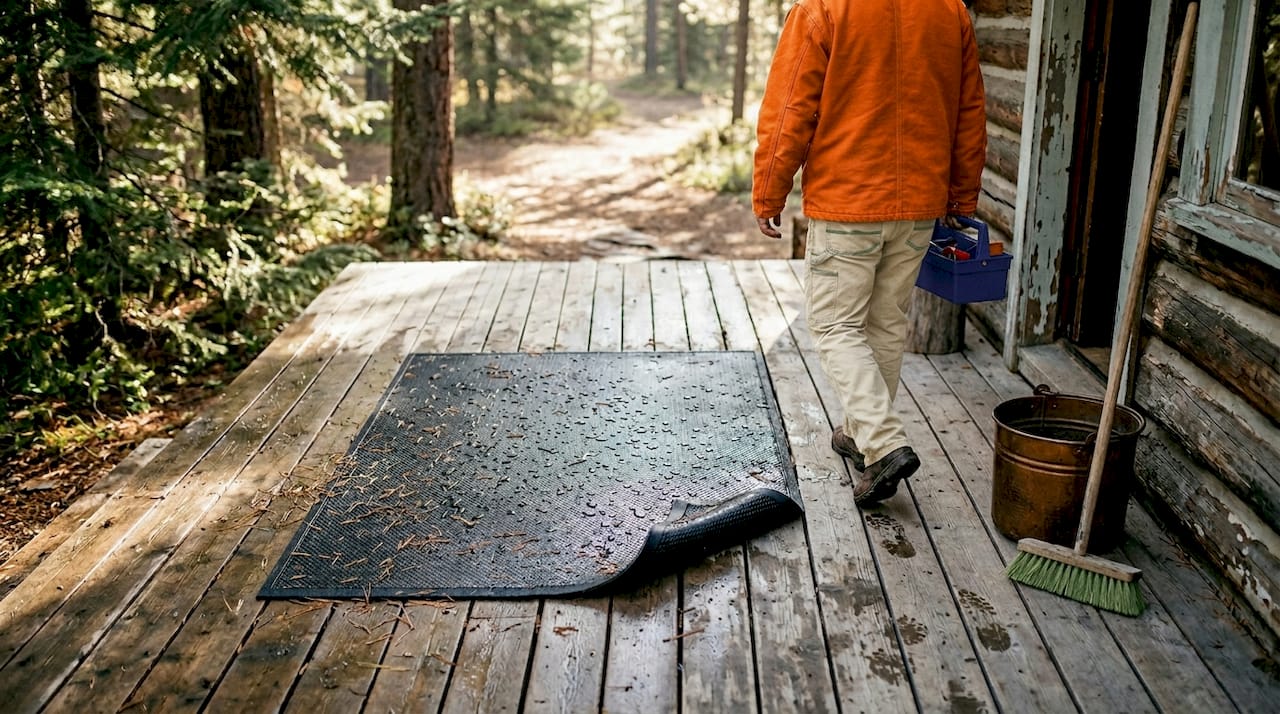
Every mat fails in a predictable pattern tied to its weakest component. Failure modes like edge curling, backing cracking, and fiber shedding directly indicate which layer or material is breaking down first. Once you know what to look for, you can read a mat’s condition accurately and act before it becomes a safety issue.
Here are the four failure modes most relevant to commercial and industrial facilities:
- Edge curling: Typically caused by backing material that has lost elasticity due to temperature cycling, moisture absorption, or UV exposure. A curling edge is a trip hazard and an early sign that the entire mat is near end of life.
- Backing cracking: Indicates the anti-skid layer has embrittled, often from cleaning chemicals that break down rubber or vinyl compounds. Once the backing cracks, the mat migrates and poses a slip risk.
- Fiber shedding: Common in textile and coir mats exposed to foot traffic beyond their rated weight class. Shedding means the fiber bond has failed and the mat is no longer capturing dirt effectively.
- Loss of anti-skid function: Can develop without visible damage. Anti-skid nibs or coatings wear smooth over time on polished or sealed floors. Test anti-skid performance periodically rather than waiting for a slip incident.
Cheap mats show these failure signals within the first year. Quality mats show early warning signs after several years, giving you a window to plan replacement rather than react to it. Warranty claims and return data from mat suppliers consistently show that failure mode timing is one of the strongest predictors of real-world mat lifespan across product categories.
Pro Tip: Photograph mat condition during quarterly inspections and date-stamp the images. Three to four cycles of photos give you a clear visual record of degradation rate, which makes replacement budget requests far easier to justify to management.
Comparing mat materials for commercial use
Selecting the right mat type requires matching material properties to your specific environment. The table below summarizes durability attributes and typical lifespan by material category under normal commercial use conditions.
| Material | Best environment | Durability under heavy traffic | Moisture resistance | Typical lifespan |
|---|---|---|---|---|
| Rubber | Outdoor, industrial, transitional | High | High | 5 to 10+ years |
| PVC/Vinyl | Indoor, transitional | Medium to high | High | 3 to 7 years |
| Polypropylene textile | Indoor entrances, high-traffic lobbies | High | Medium | 3 to 5 years |
| EVA foam | Anti-fatigue, light industrial | Medium | Low to medium | 2 to 4 years |
| Coir | Outdoor entry scraping | Medium | Low | 1 to 3 years |
Rubber mats perform reliably outdoors and under heavy industrial traffic, but quality and formulation vary significantly between vendors. A rubber mat from a low-grade manufacturer may curl at the edges within months, while a properly compounded mat holds flat for years. Demand specifications on rubber compound grade when sourcing for high-stress applications.
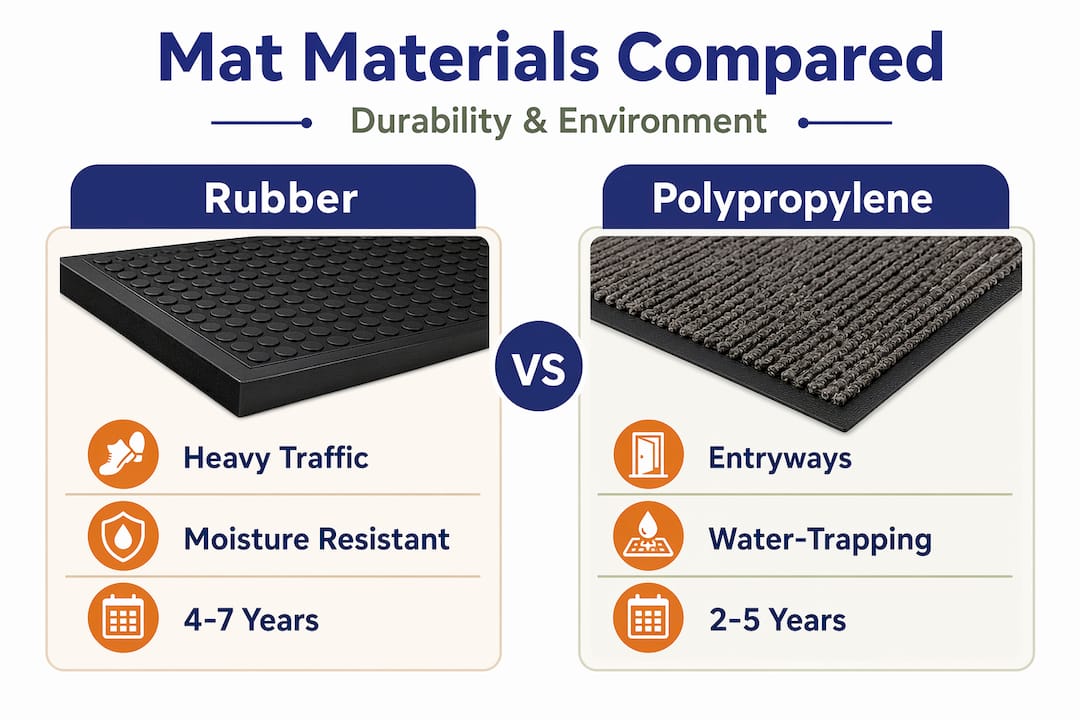
Polypropylene textile mats, like Waterhog-style products, excel at entrances because the raised fiber structure traps water and debris below the walking surface. This construction keeps the surface drier and reduces fiber compression compared to flat-pile alternatives. For anti-fatigue applications in production environments, EVA foam and rubber compound mats offer the best standing comfort, but EVA loses loft faster under constant compression.
Pro Tip: For transitional zones between outdoor and indoor spaces, a two-mat system works better than a single heavy-duty mat. Place an aggressive scraper mat outside for debris removal, then a moisture-absorbing textile mat inside. This splits the wear between two lower-cost mats and extends the life of each.
Practical tips for extending mat durability
Technical knowledge about materials and failure modes only pays off if it translates into daily facility practice. These steps directly extend mat life and improve cost-per-year performance:
-
Inspect mats on a fixed quarterly schedule. Look specifically for the four failure modes covered above. Do not wait for visible damage. Early failure signs allow proactive replacement that prevents slip incidents and unplanned budget spend.
-
Match cleaning method to mat material. Maintenance frequency and method directly affect durability. Rubber and vinyl mats tolerate pressure washing and mild detergents well. Textile mats should be vacuumed regularly and washed with low-alkali solutions. Avoid bleach-based or high-alkalinity cleaners on any backing material, as these accelerate cracking.
-
Verify substrate compatibility before installation. Proper placement and installation significantly affect mat lifespan and safety. Uneven floors create localized stress points that cause premature backing failure. Recessed mat wells eliminate edge curl risk entirely at high-traffic entries.
-
Rotate mats where traffic patterns are asymmetric. Entrances with a door swing on one side generate concentrated wear in a single zone. Rotating mats 180 degrees every three to four months distributes wear more evenly and can double usable mat life.
-
Set replacement triggers based on failure mode data, not calendar dates. A mat in a sheltered indoor corridor may perform well for seven years. The same mat at an exterior loading dock may need replacement in three. Track condition, not just time, and refer to a structured mat replacement guide that accounts for usage intensity and environment.
-
Test anti-skid performance after deep cleaning. Anti-skid coatings can be temporarily reduced by soap residue or floor wax buildup. After each cleaning cycle, perform a basic pull-test on the mat corner to confirm grip before returning it to service.
My take on what facility managers get wrong
I’ve spent years looking at how facilities approach mat procurement, and the most consistent mistake is treating durability as a product specification rather than a management outcome. A manager reads “heavy duty” on a product page, purchases based on that label, and then replaces the same mat 18 months later wondering why it failed.
The reality I keep coming back to is this: mat failure results from a mismatch between construction and environmental stress, not simply from buying a lower-grade product. I’ve seen premium rubber mats fail prematurely because the facility cleaned them with a high-alkalinity floor stripper. I’ve seen basic polypropylene entrance mats last six years because the maintenance team rotated, vacuumed, and properly dried them every week.
What I’ve found actually works is building a short mat specification for each location in a facility, not a single standard for the whole building. A loading dock, a lobby, and a production floor each have different traffic weights, moisture loads, and chemical exposures. A single mat spec applied across all three will always be a compromise that underserves at least two of the three locations.
The other shift worth making is using failure mode monitoring as a feedback loop. When a mat fails, document which mode triggered replacement and how long it took. After two or three replacement cycles per location, you’ll have real data showing which product and material combination performs best in your specific conditions. That data is worth more than any manufacturer’s durability claim.
— Werner
Durable mats for commercial facilities from Mats4u
Mats4u carries a full range of mats built for demanding commercial and industrial applications. The Cushion Select anti-fatigue mat is engineered for industrial use with multi-layer construction that withstands constant foot traffic in production and warehouse environments. For high-visibility entry areas, premium custom logo mats deliver both branding clarity and durable backing construction rated for heavy commercial use. The full range of traditional commercial mats covers entrances, transitional zones, and specialty applications. All products ship free on orders over $100, and the product pages include detailed material and construction specs to match the right mat to each location in your facility.
FAQ
What makes mats durable in high-traffic commercial settings?
Durability in high-traffic settings comes from multi-layer construction, appropriate material selection for the specific environment, and consistent maintenance. Mats with a wear-resistant top, flexible core, and anti-skid backing last significantly longer than single-layer alternatives.
How do I test mat durability before purchasing?
Request material specifications and construction details from the supplier, including backing compound grade and layer count. Look for products with documented warranty terms and ask whether the vendor publishes failure mode or return rate data.
What are the best materials for mats in industrial environments?
Rubber and heavy-grade PVC are the top performers in industrial settings due to their resistance to oils, moisture, and heavy loads. Rubber compound quality varies by vendor, so specify grade requirements when ordering for demanding applications.
How often should commercial mats be replaced?
Replacement timing depends on location, traffic intensity, and observed failure mode progression rather than a fixed calendar schedule. High-traffic outdoor entries may need replacement every two to three years, while sheltered indoor mats in moderate-traffic corridors can last five to seven years.
Does cleaning method affect how long mats last?
Yes. Using incompatible cleaning chemicals, particularly high-alkalinity agents or bleach-based cleaners, accelerates backing cracking and fiber breakdown. Match cleaning products to mat material specifications, and allow mats to dry completely before returning them to service.


