


Finding the right yoga mat for your retail wellness space often means weighing durability against your commitment to sustainability. Eco-conscious facility managers across the United States face this challenge as they seek products that truly align with environmental values. By understanding how sustainable materials like natural rubber and certifications set these mats apart, you can confidently choose an option that supports both your business goals and the planet.
Table of Contents
- Defining An Environmentally Friendly Yoga Mat
- Popular Materials And Performance Differences
- Certifications And Safety Standards For Eco Mats
- Cost, Durability, And Lifecycle Analysis
- Common Pitfalls In Selecting Eco Mats
Key Takeaways
| Point | Details |
|---|---|
| Material Selection | Choose yoga mats made from sustainable materials like natural rubber, cork, and organic cotton to ensure environmental responsibility. |
| Certifications Matter | Look for certifications such as OEKO-TEX and GOTS to verify the absence of harmful chemicals and the integrity of material sourcing. |
| Lifecycle Assessment | Evaluate the entire lifecycle of mats, considering durability and environmental impact over time rather than just the initial cost. |
| Avoid Common Pitfalls | Be wary of misleading eco-friendly claims and ensure thorough research on material composition and certifications before making purchases. |
Defining an Environmentally Friendly Yoga Mat
The concept of an environmentally friendly yoga mat goes far beyond simple aesthetics. These mats represent a commitment to sustainable manufacturing, material selection, and ecological responsibility within wellness spaces. Understanding their distinctive characteristics helps facility managers make informed purchasing decisions that align with environmental values.
An environmentally friendly yoga mat is fundamentally defined by its materials and production process. Sustainable materials like natural rubber distinguish these mats from traditional petroleum-based alternatives. Key characteristics include:
- Composition from biodegradable natural fibers
- Absence of toxic chemicals like PVC and phthalates
- Manufacturing processes that minimize carbon footprint
- Ethical sourcing of raw materials
- Complete or partial biodegradability at end of product lifecycle
Historically, yoga mats evolved from natural materials such as animal skins and grass to predominantly synthetic plastics. Modern eco-friendly yoga mats represent a deliberate return to sustainable design principles. Natural rubber and organic cotton now replace petroleum-based synthetics, offering superior environmental credentials without compromising performance.
Facility managers should recognize that environmentally friendly yoga mats aren’t just about material composition - they represent a holistic approach to sustainability. This means evaluating not just the mat itself, but its entire lifecycle, from raw material extraction to eventual disposal.
Pro tip: When evaluating eco-friendly yoga mats, request detailed material certifications and lifecycle assessments to confirm genuine environmental credentials.
Popular Materials and Performance Differences
Environmentally friendly yoga mats offer a diverse range of materials, each bringing unique performance characteristics to wellness spaces. Natural cork and rubber materials represent the most prominent sustainable options for facility managers seeking high-quality, ecological alternatives to traditional synthetic mats.
The primary eco-friendly yoga mat materials include:
- Natural Rubber: Provides exceptional grip and durability
- Cork: Offers antimicrobial properties and improved traction when wet
- Organic Cotton: Soft, breathable, and biodegradable
- Jute: Textured surface with natural biodegradability
- Thermoplastic Elastomer (TPE): Flexible synthetic alternative with potential recyclability
Thermoplastic elastomer (TPE) yoga mats present an interesting case study in material complexity. While marketed as an eco-friendly option, TPE’s environmental credentials remain nuanced. Some TPE mats contain additives that complicate their sustainability claims, making careful evaluation essential for facility managers committed to genuine ecological responsibility.
Performance differences among these materials significantly impact user experience. Natural rubber mats typically provide superior grip and resilience but may initially present a distinct rubber odor. Cork mats improve in traction as they absorb moisture, making them ideal for high-intensity yoga practices. Jute mats offer excellent biodegradability but provide less cushioning compared to rubber or synthetic alternatives.

Here’s a comparison of popular eco-friendly yoga mat materials and their suitability for wellness spaces:
| Material | Best For | Drawback | Environmental Benefit |
|---|---|---|---|
| Natural Rubber | Grip, longevity | Strong initial odor | Highly biodegradable |
| Cork | Sweaty practices | Less cushioning | Renewable, antimicrobial |
| Organic Cotton | Gentle/restorative yoga | Moderate grip | Fully compostable |
| Jute | Hot yoga, texture seekers | Minimal shock absorption | Fast breakdown, low impact |
| TPE | Versatility, portability | Mixed sustainability | Potentially recyclable |
Pro tip: Request detailed material composition reports and third-party sustainability certifications to accurately assess the ecological impact of different yoga mat materials.
Certifications and Safety Standards for Eco Mats
Facility managers seeking environmentally friendly yoga mats must navigate a complex landscape of safety standards and certifications. Environmentally preferable product standards play a crucial role in verifying the ecological and health credentials of yoga mat materials.
Key certification standards to consider include:
- OEKO-TEX Standard 100: Confirms absence of harmful chemicals
- Global Organic Textile Standard (GOTS): Validates organic material sourcing
- ISO 14000 Series: Ensures environmental management practices
- EPA Safer Choice Certification: Indicates reduced environmental impact
- ASTM International Standards: Provides technical performance benchmarks
Safety standards for eco-friendly mats fundamentally focus on eliminating toxic substances. This means screening for potentially harmful chemicals such as PVC, phthalates, and heavy metals that can compromise both human and environmental health. Third-party certifications offer facility managers transparent verification of material safety beyond manufacturer claims.
Beyond chemical composition, these certifications also evaluate manufacturing processes, responsible sourcing, and overall lifecycle environmental impact. Comprehensive certification demonstrates a manufacturer’s commitment to sustainable production, ensuring that eco-friendly yoga mats meet rigorous standards for both performance and ecological responsibility.
This summary table outlines how key certifications impact eco mat selection criteria:
| Certification | Verifies | Typical Impact on Buying Decision | Scope |
|---|---|---|---|
| OEKO-TEX Standard 100 | Absence of toxic chemicals | Ensures user safety | Material composition |
| GOTS | Organic sourcing | Increases trust in claims | Natural fibers |
| ISO 14000 Series | Environmental management | Validates manufacturing processes | Production standards |
| EPA Safer Choice | Reduced ecological harm | Prioritizes low-impact options | Full lifecycle |
| ASTM International | Performance benchmarks | Confirms reliability and function | Product durability |
Pro tip: Request comprehensive certification documentation and validate each standard’s specific testing protocols before making final purchasing decisions.
Cost, Durability, and Lifecycle Analysis
Environmentally friendly yoga mats represent a complex financial investment for facility managers, balancing initial costs with long-term sustainability considerations. Eco-friendly yoga mat durability reveals that higher upfront expenses often translate into superior performance and reduced environmental impact.
Key cost and durability factors include:
- Initial Purchase Price: Generally 20-50% higher than conventional mats
- Material Longevity: Natural rubber and cork mats often outlast synthetic alternatives
- Replacement Frequency: Reduced due to superior wear resistance
- Maintenance Requirements: Typically lower for high-quality eco mats
- Environmental Cost: Significantly reduced carbon footprint compared to traditional options
Lifecycle sustainability assessments demonstrate that eco-friendly mats offer substantial long-term value. While the initial investment appears higher, these mats typically provide extended usability, reduced toxic emissions, and complete biodegradability. The ecological cost-benefit analysis strongly favors sustainable mat options, especially for facilities committed to environmental responsibility.
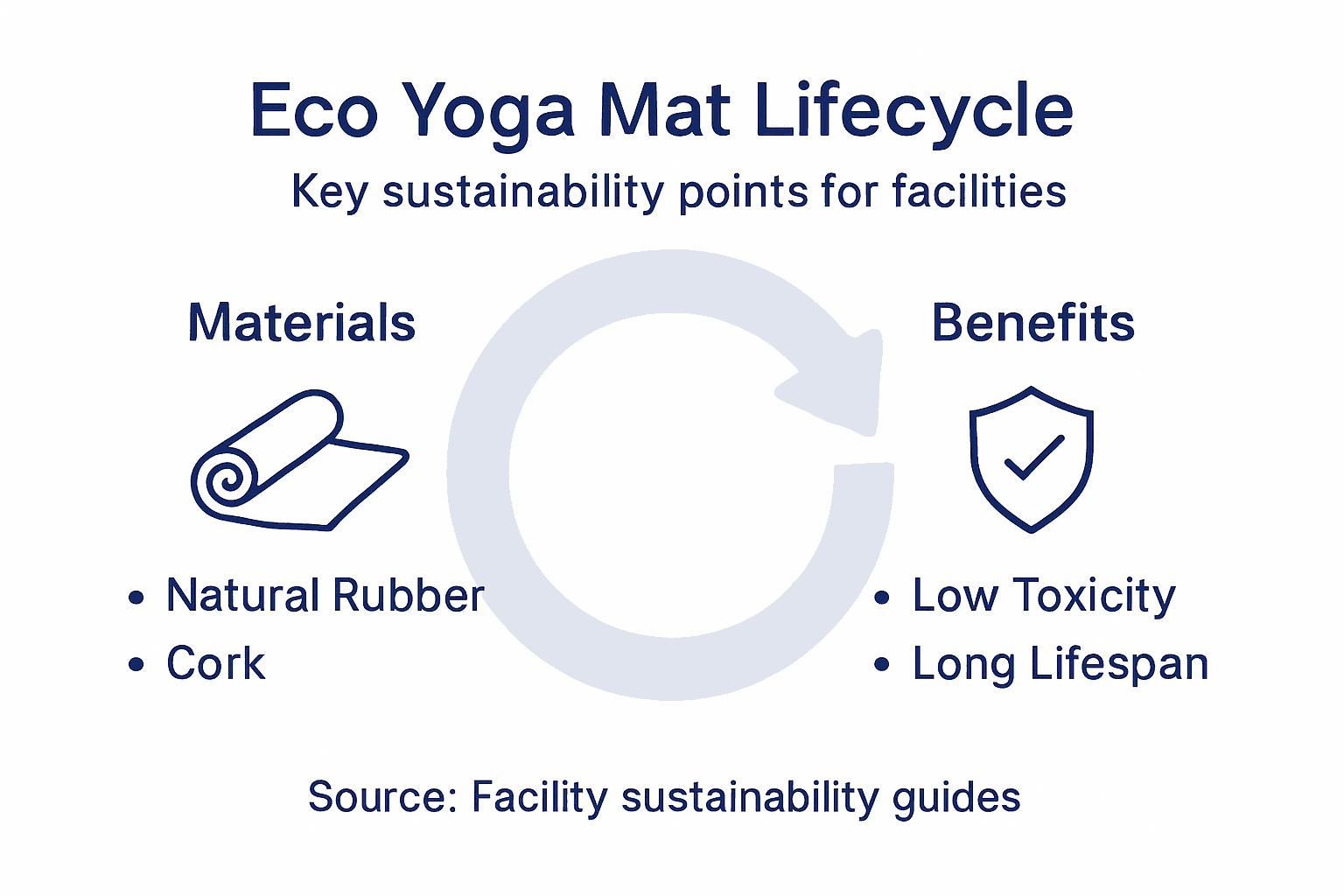
Facility managers should view eco-friendly yoga mats as a strategic investment rather than an expense. The combination of durability, reduced environmental impact, and potential long-term cost savings makes these mats an increasingly attractive option for wellness spaces prioritizing sustainability and quality.
Pro tip: Calculate total lifecycle costs by comparing expected mat lifespan, replacement frequency, and environmental impact, not just initial purchase price.
Common Pitfalls in Selecting Eco Mats
Navigating the complex world of environmentally friendly yoga mats requires careful scrutiny beyond surface-level marketing claims. Common purchasing mistakes can undermine facility managers’ sustainability efforts and lead to unexpected environmental and financial consequences.
Key pitfalls to avoid include:
- False Eco-Friendly Claims: Products marketed as green without transparent certifications
- Chemical Composition Ignorance: Overlooking potentially harmful material ingredients
- Durability Misconceptions: Choosing mats that wear quickly and generate unnecessary waste
- Price-Driven Decisions: Prioritizing cost over long-term environmental impact
- Incomplete Lifecycle Assessments: Failing to evaluate total environmental footprint
TPE mat complexities present a particularly nuanced challenge for facility managers. While thermoplastic elastomer (TPE) is often marketed as an eco-friendly alternative, variations in chemical composition mean not all TPE mats deliver genuine sustainability. Some manufacturers do not disclose complete ingredient lists, making comprehensive environmental assessment difficult.
Sustainable purchasing requires a holistic approach that goes beyond initial impressions. Facility managers must demand detailed material documentation, third-party certifications, and comprehensive lifecycle assessments to make truly informed decisions about yoga mat selections.
Pro tip: Develop a standardized evaluation checklist that includes material transparency, certification requirements, durability metrics, and complete lifecycle impact before purchasing eco-friendly yoga mats.
Upgrade Your Facility with Sustainable, High-Quality Mats That Matter
Choosing the right yoga mats for your facility means balancing durability, safety, and true environmental responsibility. The challenges of identifying genuinely eco-friendly yoga mats with verified certifications and long-lasting materials can feel overwhelming. Your goal is to provide a wellness space that respects both user health and the planet without sacrificing performance or budget.
At Mats4U, we understand these priorities. Our Commercial Mats and Indoor Mats collections feature options made with high-quality materials designed for durability and sustainability. Plus, explore specialized comfort through our Anti-Fatigue Mats that promote wellness in high-traffic environments.
Make the smart choice today for your facility and the environment. Visit Mats4U now to discover mats that align with your sustainability goals while delivering reliable, long-term value.
Frequently Asked Questions
What materials are considered environmentally friendly for yoga mats?
Environmentally friendly yoga mats are typically made from sustainable materials such as natural rubber, cork, organic cotton, jute, and thermoplastic elastomer (TPE). Natural rubber and organic cotton are especially favored for their biodegradability and low environmental impact.
How do I evaluate the durability and lifespan of an eco-friendly yoga mat?
To evaluate durability, consider the material’s resistance to wear and tear, maintenance requirements, and expected replacement frequency. Natural rubber and cork mats generally offer superior longevity compared to synthetic alternatives, making them a better investment over time.
What certifications should I look for when selecting eco-friendly yoga mats?
Look for certifications like OEKO-TEX Standard 100, Global Organic Textile Standard (GOTS), ISO 14000 Series, EPA Safer Choice Certification, and ASTM International Standards to ensure that the mat is free from toxic chemicals and produced sustainably.
Are there any specific downsides to using eco-friendly yoga mats?
Some eco-friendly mats, like those made from natural rubber, may have a strong initial odor. Additionally, certain materials like jute may provide less cushioning. It’s crucial to evaluate each mat’s characteristics to ensure it meets your practice and user needs.
Recommended
- 7 Best Eco Friendly Yoga Mat Options for Facility Managers – Mats4U USA
- Eco Friendly Yoga Mat: Sustainable Choices for Facilities – Mats4U USA
- 7 Essential Benefits of Eco Friendly EVA Yoga Mats – Mats4U USA
- Understanding Eco Friendly Mats and Their Benefits – Mats4U USA
- Organic vs Regular Cotton Hoodies: Worth It? – MEXESS


