


TL;DR:
- Properly maintained entrance mats are essential for preventing slip-and-fall accidents and reducing liability claims.
- Selecting the right mats for each zone, sizing them according to the 15-foot rule, and performing regular maintenance ensure maximum safety and effectiveness.
Entrance mats are the primary defense against slip-and-fall accidents at facility entrances, and slip-and-fall incidents are the leading cause of general liability claims in commercial buildings. Properly selected and maintained entrance mats capture moisture, debris, and contaminants before they reach interior floors. Products like WaterHog and Soil Guard are standard in high-traffic facilities precisely because they combine traction, absorption, and durability in a single unit. Applying the right entrance mat safety tips reduces accident risk, lowers cleaning costs, and protects your facility from costly liability exposure. This guide covers mat selection, placement, maintenance, and the mistakes that undermine all three.
What are the best entrance mats for slip resistance and durability?
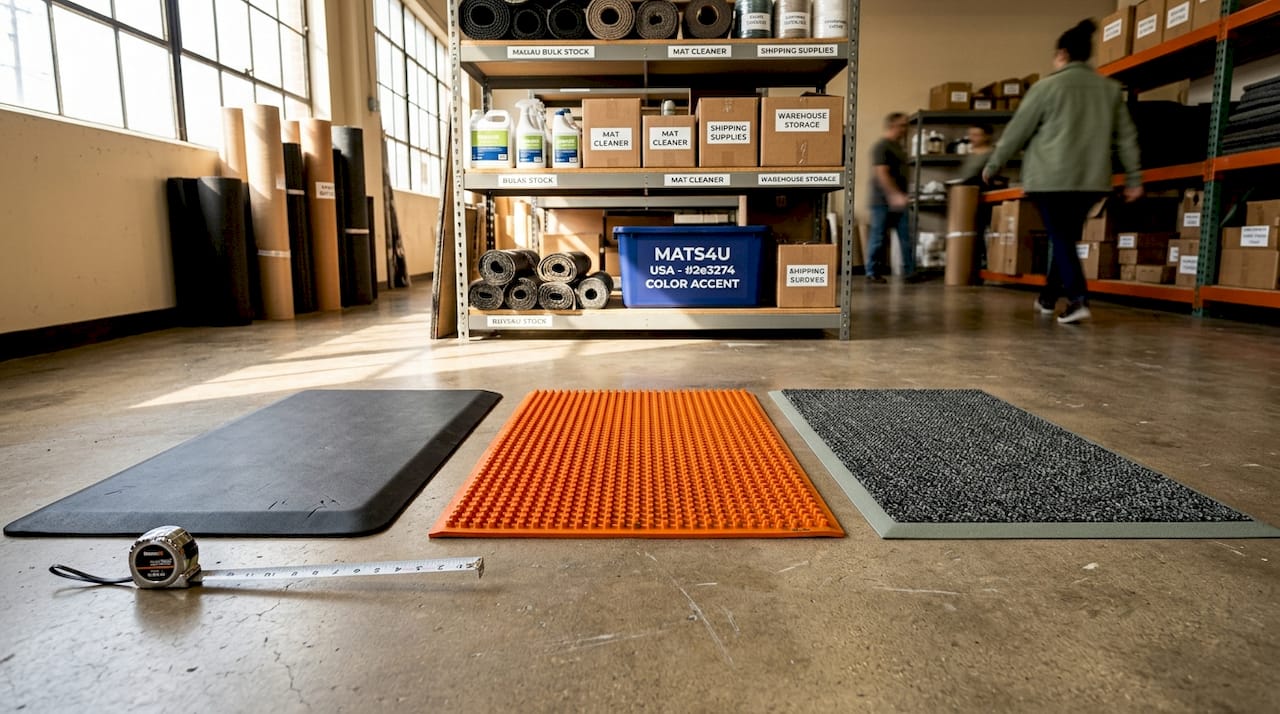
Mat selection is the foundation of any entrance safety program. The industry recognizes three primary mat categories, each designed for a specific function in the entry sequence: scraper mats, wiper mats, and anti-fatigue mats.
Scraper mats are placed outdoors or at the threshold. They use rigid rubber or vinyl tines to dislodge heavy debris, mud, and snow from shoe soles before a person steps inside. Rubber scrapers perform well in wet and freezing conditions because the material does not absorb water and resists cracking in low temperatures. Vinyl alternatives offer similar performance at a lower price point but degrade faster under UV exposure.
Wiper mats are positioned just inside the entrance. Their primary job is moisture absorption. Carpet-fiber wipers, including nylon and polypropylene constructions, pull residual water from shoe soles after the scraper has removed solid debris. WaterHog mats use a distinctive bi-level surface that traps water below the walking plane, keeping the top surface dry even under continuous foot traffic.
Anti-fatigue mats serve a different purpose. They belong at staffed entrance desks or security checkpoints where employees stand for extended periods. The cushioned construction reduces leg and lower back strain, which directly reduces distraction-related safety incidents.
Backing type is a non-negotiable safety factor. Non-slip backing must match the floor surface: cleated rubber backing anchors mats on carpet, while flat rubber backing grips hard surfaces like tile and polished concrete. A mat that slides is as dangerous as a wet floor.
| Mat Type | Primary Function | Best Surface | Recommended Material |
|---|---|---|---|
| Scraper mat | Remove heavy debris and mud | Outdoor/threshold | Rigid rubber or vinyl |
| Wiper mat | Absorb residual moisture | Indoor entry zone | Nylon or polypropylene fiber |
| Anti-fatigue mat | Reduce standing strain | Staffed stations | Cushioned foam or gel core |
| Combination mat | Scrape and wipe in one unit | High-traffic thresholds | Rubber border, fiber insert |
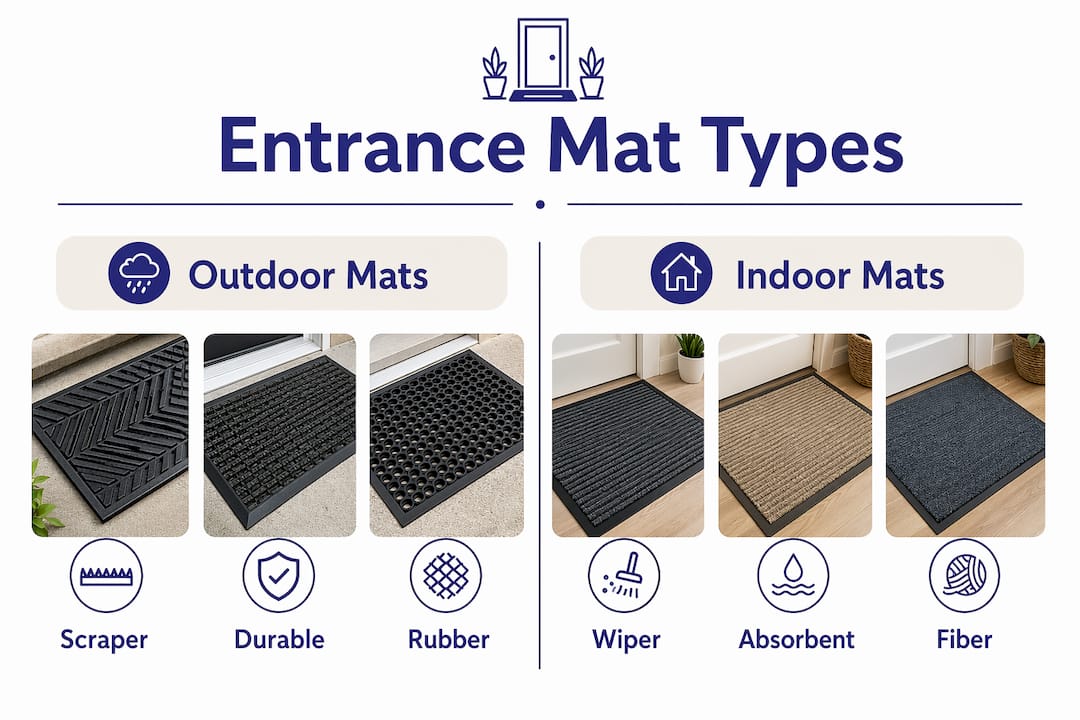
Pro Tip: Match mat type to seasonal conditions. In regions with heavy snowfall, prioritize rubber scrapers with deep tine profiles for the outdoor zone and replace wiper mats more frequently during winter months when moisture volume spikes.
How to size and position entrance mats for maximum safety
Mat placement is where most facilities fall short. Selecting the right mat type means nothing if the mat does not cover enough floor area to do its job. The 15-foot rule is the industry standard: a minimum of 15 feet of continuous matting from the entrance captures 80 to 90 percent of dirt and moisture tracked in from outside. That figure drops sharply with shorter mat runs, and every uncaptured contaminant becomes a slip hazard on interior flooring.
Effective placement follows a three-zone model:
- Outdoor zone: Place a scraper mat directly outside the entrance door. Size it to cover the full door width plus at least 12 inches on each side to capture foot traffic from all approach angles.
- Threshold zone: Position a combination or transition mat at the door sill. This zone handles the highest concentration of moisture transfer and needs a mat with both scraping and absorption properties.
- Indoor zone: Extend wiper mats at least 10 to 12 feet into the interior. This is where residual moisture is removed and where most slip-and-fall incidents occur if matting is absent or undersized.
When a single entrance corridor cannot accommodate 15 feet of continuous matting, modular mat systems solve the problem. Interlocking tiles or runner sections can be configured around architectural features like columns or reception desks while still delivering the required walk-off distance.
Mat width matters as much as length. A mat that covers only the center of a wide entrance leaves unmatted floor on both sides. Pedestrians naturally drift toward the edges, especially when carrying bags or pushing carts, and those unmatted zones become the highest-risk areas in the entry sequence.
Pro Tip: Use a multi-layer system for staged debris removal. A rubber scraper outdoors, a combination mat at the threshold, and a fiber wiper mat indoors creates three sequential capture points. Each layer handles a different contaminant type, and together they outperform any single mat covering the same total area.
What maintenance routines keep entrance mats safe over time?
A mat that is not maintained becomes a hazard rather than a safeguard. Debris accumulation reduces traction, saturated fibers stop absorbing moisture, and a mat that curls at the edges creates a trip hazard. The following routine addresses all three failure modes.
Daily tasks form the baseline. Daily shaking and vacuuming dislodge embedded dirt and prevent the surface from becoming compacted. For high-traffic entrances, this means morning and midday attention, not just end-of-day cleanup. Spot-check mat edges and corners to confirm they lie flat against the floor after each cleaning cycle.
Weekly tasks go deeper. Wash fiber mats with mild detergent and warm water. Scrub rubber mats with a stiff brush to clear tine channels that trap compacted debris. Treat any stains before they set, since stained mats are often replaced prematurely when spot treatment would extend their service life by months.
Drying is the step most maintenance teams skip or rush. Damp mats increase slip risk as much as a wet floor does. Mats must be fully air-dried before being returned to service. In facilities without dedicated drying space, rotating two sets of mats allows one set to dry while the other is in use.
Periodic deep cleaning every three to six months addresses contamination that daily and weekly routines cannot reach. Commercial extraction cleaning removes embedded grit from fiber mats that vacuuming leaves behind. This process also restores fiber loft, which directly affects moisture absorption capacity.
Cleaning beneath the mat is as important as cleaning the mat itself. Debris build-up under fixed mats degrades the floor surface, creates uneven support, and reduces the mat’s grip on the floor. Lift and clean beneath every mat during weekly cycles.
Pro Tip: Keep a cleaning log for each entrance mat location. Record the date, cleaning method, and any damage observed. This log serves two purposes: it creates a maintenance record that supports liability defense, and it identifies mats that are degrading faster than expected, signaling that the mat type or size may need to be reconsidered for that location.
What common mistakes reduce entrance mat safety?
The most frequent errors in entrance mat programs are not about product quality. They are about installation, sizing, and neglect. Recognizing these mistakes is the fastest way to close safety gaps without replacing every mat in your facility.
- Using mats that do not lay flat. A curled or buckled mat edge is a trip hazard. This happens when mats are too large for the space and fold against walls or door frames, or when rubber backing has hardened and lost flexibility. Replace mats that cannot be flattened.
- Ignoring the floor condition beneath the mat. Cracked tiles, uneven grout lines, or damaged concrete under a mat create an unstable walking surface even when the mat itself is in good condition. Inspect and repair the substrate before placing any mat.
- Undersizing the mat. A mat that covers only the center of a wide entrance or stops short of the required walk-off distance gives pedestrians a false sense of security. The uncovered floor adjacent to the mat is often wetter than if no mat were present, because the mat channels moisture to its edges.
- Skipping the drying step after cleaning. Returning a wet mat to service is a documented cause of slip incidents. This mistake is most common in facilities that clean mats during peak hours to minimize downtime.
- Mismatching mat type to zone. Placing a fiber wiper mat outdoors exposes it to conditions it cannot handle. Saturated outdoor fiber mats become slip hazards within hours of a rain event. Rubber scrapers belong outside; fiber wipers belong inside.
Properly sized mats capture up to 80% of contaminants entering a building, improving air quality and reducing cleaning costs. A mat that is the wrong type, wrong size, or poorly maintained captures a fraction of that.
Pro Tip: For staffed entrance desks where security or reception personnel stand for hours, add an anti-fatigue mat behind the counter. It addresses comfort and reduces the fatigue-related inattention that contributes to safety incidents at those stations.
Key takeaways
Effective entrance mat safety requires the right mat type, correct sizing to the 15-foot standard, and a consistent maintenance routine that includes cleaning beneath the mat and full drying before return to service.
| Point | Details |
|---|---|
| Match mat type to zone | Use rubber scrapers outdoors, fiber wipers indoors, and anti-fatigue mats at staffed stations. |
| Apply the 15-foot rule | A minimum of 15 feet of matting captures 80 to 90 percent of tracked-in contaminants. |
| Dry mats before reuse | Returning a damp mat to service creates a slip hazard equal to a wet floor. |
| Clean beneath the mat | Debris under fixed mats degrades floor surfaces and reduces mat grip and stability. |
| Log maintenance activity | Cleaning records support liability defense and identify underperforming mat locations. |
What I’ve learned from watching facilities get mat safety wrong
Most liability claims I’ve seen tied to entrance mats share one trait: the mat was present but not maintained. Facilities invest in a quality WaterHog or rubber scraper mat, place it correctly at installation, and then treat it as permanent infrastructure that requires no further attention. Six months later, the fiber is compacted, the backing has hardened, and the mat is sliding on the tile every time someone steps on it.
The second pattern is seasonal neglect. Facilities that run a solid summer maintenance program often fail to adjust when winter arrives. Moisture volume at entrances can triple during snow and rain seasons, and a mat that was adequate in July is overwhelmed by November. Rotating to a higher-capacity mat for winter months and increasing cleaning frequency is not optional in cold-weather climates. It is the difference between a functional safety program and a liability waiting to happen.
Budget pressure pushes facilities toward undersized mats. A mat that covers 60 percent of the entrance costs less upfront and costs far more in cleaning labor and incident exposure over a full year. The entrance mat benefits for facility managers are well documented, and the return on a properly sized mat program is measurable in reduced cleaning hours alone, before you factor in liability reduction.
The one practice that consistently separates well-run facilities from reactive ones is the maintenance log. Facilities that track cleaning dates, mat condition, and incident proximity to mat locations catch problems before they become claims. It takes five minutes per week and has saved more than one facility manager from a difficult conversation with legal counsel.
— Werner
Upgrade your facility’s entrance mat program with Mats4u
Mats4u carries the full range of commercial entrance mats needed to build a complete, zone-based safety program. The WaterHog Max Herringbone Mat delivers high-capacity moisture control for heavy-traffic indoor entry zones, while the WaterHog Drainable Border Mat handles outdoor and threshold positions where water pooling is a constant risk. For facilities that want to combine entrance safety with brand presence, the custom logo floor mat offers slip-resistant construction with high-definition printing. All products ship free on orders over $100 and are built to commercial-grade specifications. Browse the full selection at Mats4u to find the right mat for every zone in your facility.
FAQ
What is the 15-foot rule for entrance mats?
The 15-foot rule states that a minimum of 15 feet of continuous matting from the entrance is required to remove 80 to 90 percent of tracked-in dirt and moisture. Shorter mat runs leave a significant percentage of contaminants on interior floors, increasing slip risk.
How often should entrance mats be cleaned?
High-traffic entrance mats require daily vacuuming and debris removal, weekly washing with mild detergent, and deep extraction cleaning every three to six months. Mats must be fully dried before returning to service to avoid creating a slip hazard.
What backing type prevents entrance mats from sliding?
Cleated rubber backing anchors mats on carpet, while flat rubber backing grips hard surfaces like tile and polished concrete. Non-slip backing matched to the floor type is the single most important factor in preventing mat movement.
Why do facilities need entrance mats at every zone?
Different mat types handle different contaminants. Outdoor scrapers remove solid debris, threshold mats transition moisture, and indoor wipers absorb residual water. A single mat at the door cannot replicate the sequential capture that a three-zone system provides.
How do entrance mats reduce facility cleaning costs?
Properly sized entrance mats capture up to 80 percent of contaminants before they reach interior floors, directly reducing the frequency and labor required for floor cleaning. For guidance on selecting the right mat for your specific facility conditions, Mats4u provides detailed product specifications and selection tools.


