


Tracking dirt and moisture into a busy commercial facility can quickly compromise both safety and cleanliness. Facility managers across the United States know the challenge of protecting high-traffic entryways, where every footstep brings in allergens or debris. Understanding the key differences between indoor and outdoor doormats—from materials built to withstand weather outside to softer, absorbent designs inside—sets the foundation for more effective floor care and accident prevention throughout your property.
Table of Contents
- Defining Indoor and Outdoor Doormats
- Comparing Material Types and Construction
- Placement Strategies for Maximum Effectiveness
- Durability, Maintenance, and Lifespan Concerns
- Common Mistakes in Mat Selection
Key Takeaways
| Point | Details |
|---|---|
| Doormat Functions | Indoor doormats focus on reducing allergens, while outdoor doormats prioritize debris removal before entry. |
| Material Selection | Choosing the right materials based on location and intended use is crucial for maximizing effectiveness and durability. |
| Placement Strategy | A layered mat system at entrances enhances cleanliness and safety by effectively managing dirt and moisture. |
| Maintenance Importance | Regular inspections and timely replacements of mats are essential to ensure ongoing functionality and prevent safety hazards. |
Defining Indoor and Outdoor Doormats
Facility managers recognize that doormats serve critical functions in maintaining cleanliness and safety, with distinct characteristics separating indoor and outdoor solutions. Indoor doormats are strategically placed inside doorways to provide clean surfaces for wiping feet and reducing allergens tracked into buildings.
Outdoor doormats function differently, focusing on preliminary debris removal before entry. These mats are positioned directly outside entry points and engineered to capture larger soil particles, moisture, and external contaminants. Unlike indoor variants, outdoor doormats prioritize durability and aggressive dirt-scraping capabilities.
Key differences between indoor and outdoor doormats include:
- Material Composition: Outdoor mats use heavy-duty synthetic fibers resistant to weather
- Design Purpose: Indoor mats focus on floor protection, outdoor mats emphasize initial dirt removal
- Placement Location: Indoor mats sit within entryways, outdoor mats positioned before building entrance
- Moisture Handling: Outdoor mats channel water away, indoor mats absorb residual moisture
Performance Characteristics distinguish these mat types significantly. Outdoor doormats employ tougher materials specifically designed to withstand harsh environmental conditions, while indoor mats prioritize gentler surface interactions.
Pro tip: Select doormat materials matching your specific facility’s foot traffic intensity and environmental exposure to maximize cleaning effectiveness and longevity.
The table below summarizes how indoor and outdoor doormats impact facility management priorities:
| Consideration | Indoor Doormats | Outdoor Doormats |
|---|---|---|
| Main Benefit | Reduces indoor allergens | Captures outdoor debris |
| Safety Impact | Lowers slip risks from moisture | Prevents hazardous soil entry |
| Replacement Cycle | As indoor wear accumulates | More frequent due to weather |
| Aesthetic Role | Matches interior decor | Functional, less decorative |
Comparing Material Types and Construction
Material selection plays a crucial role in doormat performance, with significant variations between indoor and outdoor solutions. Outdoor doormats utilize durable materials designed to withstand challenging environmental conditions while efficiently removing dirt and moisture.
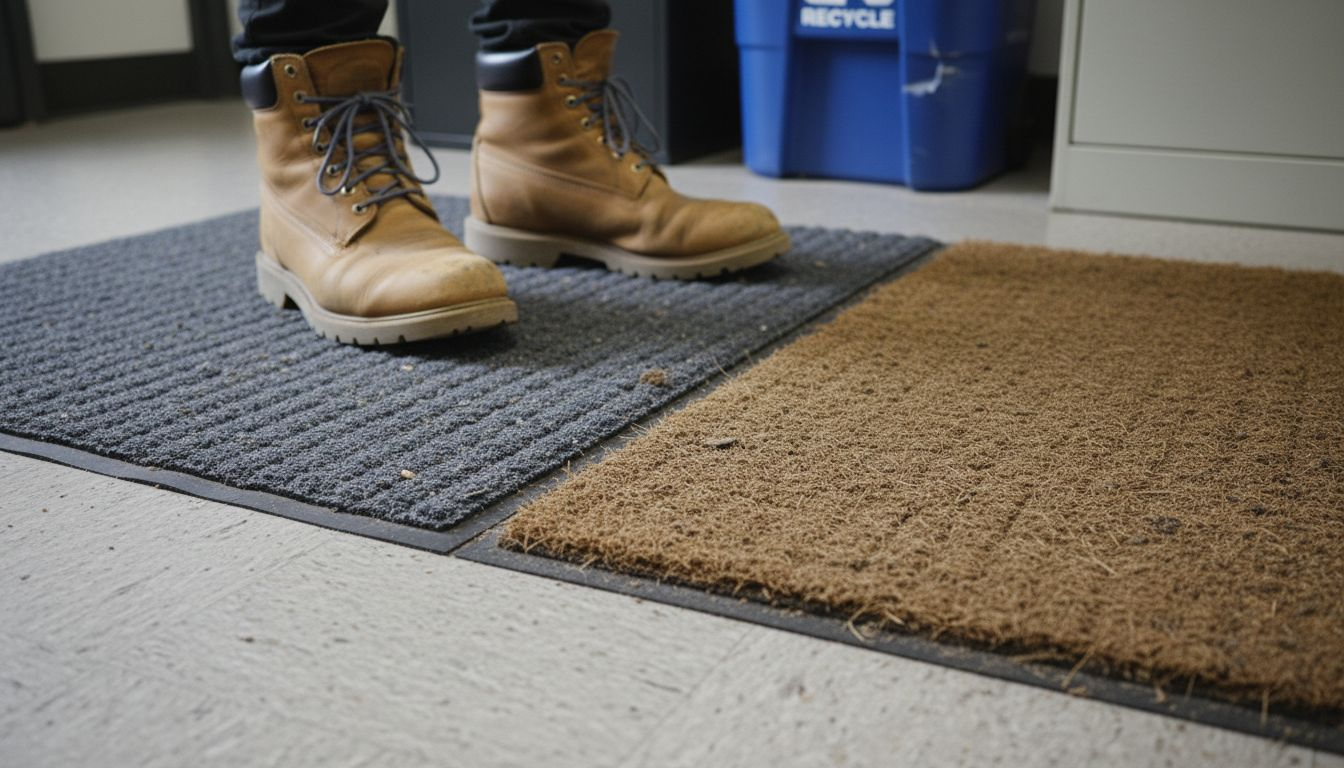
Indoor and outdoor doormats feature distinctly different construction approaches. Outdoor mats prioritize robust materials like coir, recycled rubber, and PVC that can handle heavy foot traffic and harsh weather, whereas indoor mats emphasize comfort and moisture absorption using softer fibers such as cotton and microfiber.
Key material characteristics for different doormat types include:
-
Outdoor Mat Materials:
- Coir (natural coconut fiber)
- Recycled rubber
- PVC synthetic composites
- Weather-resistant synthetic blends
-
Indoor Mat Materials:
- Cotton fibers
- Microfiber
- Polypropylene
- Sustainable textile blends
Construction techniques for doormats incorporate critical safety features like non-slip backings and varied thickness levels to balance dirt-trapping capabilities with user protection. These design elements ensure that mats not only clean shoes effectively but also prevent potential slip hazards in commercial environments.
Pro tip: Assess your facility’s specific environmental conditions and foot traffic patterns when selecting doormat materials to optimize cleaning performance and longevity.
Here is a quick reference for doormat material selection based on environment:
| Environment | Recommended Material | Rationale |
|---|---|---|
| Covered Entrance | Polypropylene, coir | Handles moderate exposure |
| High-Traffic Area | PVC, recycled rubber | Withstands heavy use |
| Interior Lobby | Microfiber, cotton | Focuses on comfort, absorption |
| Industrial Entry | Heavy-duty synthetic | Resists chemicals, abrasion |
Placement Strategies for Maximum Effectiveness
Strategic doormat placement is critical for facility safety and cleanliness. A layered approach to doormat positioning helps capture dirt and moisture effectively before contaminants spread throughout a facility.
Facility managers should implement a multi-stage mat strategy at every exterior entrance. Outdoor doormats work best positioned just outside entry points to catch initial debris, with subsequent indoor mats providing additional cleaning and moisture absorption.
Optimal placement strategies include:
-
Exterior Entry Points:
- Install grate or scraper mats to remove large debris
- Position heavy-duty outdoor mats directly before doorway
- Ensure mats cover entire entrance width
- Use non-slip backing for stability
-
Interior Entry Areas:
- Place absorbent mats immediately inside doorways
- Cover high-traffic zones completely
- Use mats with moisture-wicking capabilities
- Select mats sized appropriately for doorway dimensions
Properly layered mat systems create a comprehensive dirt and moisture management approach. By strategically positioning mats at multiple points, facilities can significantly reduce contaminant transfer, minimize slip hazards, and maintain cleaner indoor environments.
Pro tip: Measure doorway dimensions precisely and overlap mat placements to create an effective dirt-trapping zone that maximizes cleanliness and safety.
Durability, Maintenance, and Lifespan Concerns
Doormat durability represents a critical consideration for facility managers seeking long-term safety and cleanliness solutions. Material selection significantly impacts mat longevity, with different environments demanding specific maintenance approaches to prevent premature deterioration.
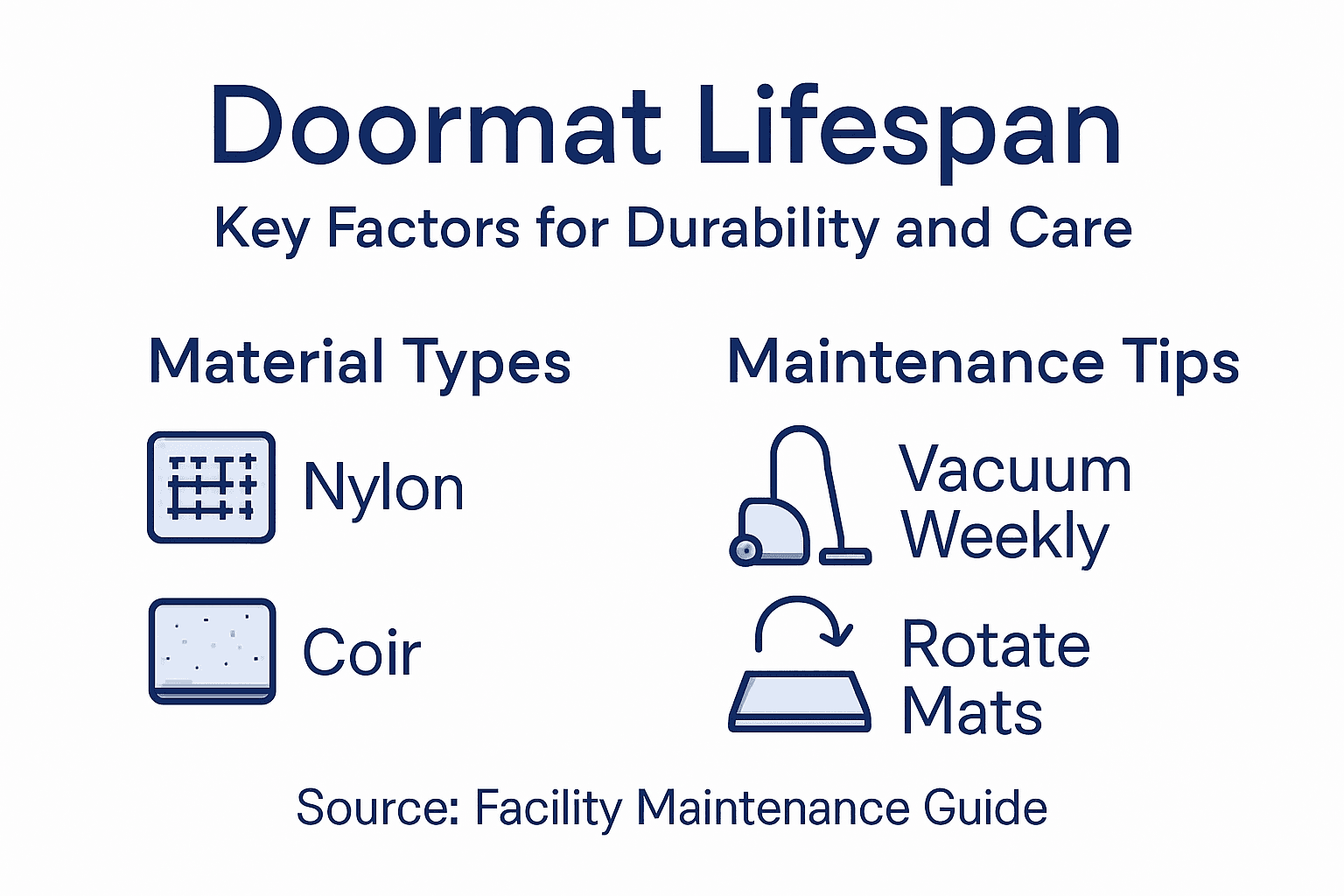
Outdoor mats constructed from coir, recycled rubber, and synthetic composites must withstand intense environmental challenges, including moisture, UV exposure, and heavy foot traffic. Indoor mats, while experiencing less extreme conditions, still require regular inspection and timely replacement to maintain their effectiveness and safety performance.
Key durability and maintenance factors include:
-
Outdoor Mat Maintenance:
- Periodic cleaning to prevent mold growth
- Regular inspection for structural integrity
- Rotation to ensure even wear patterns
- Prompt replacement of damaged sections
-
Indoor Mat Maintenance:
- Frequent cleaning to remove moisture and debris
- Weekly visual inspections for fraying or wear
- Replacement of mats showing significant deterioration
- Use of appropriate cleaning techniques based on material
Estimated lifespan data highlights the importance of proactive maintenance in extending doormat utility. By implementing structured inspection and replacement protocols, facility managers can optimize mat performance and minimize safety risks associated with worn or damaged floor coverings.
Pro tip: Develop a systematic quarterly inspection schedule for all facility doormats to track wear progression and plan timely replacements before safety becomes compromised.
Common Mistakes in Mat Selection
Doormat selection requires careful consideration to ensure facility safety and cleanliness. Common selection errors can compromise mat effectiveness and create unexpected risks for facility managers.
Facility managers frequently encounter critical mistakes that undermine mat performance. These errors range from inappropriate material choices to improper placement, each potentially introducing significant safety and hygiene challenges.
Most prevalent selection mistakes include:
-
Material Mismatches:
- Using indoor mats in outdoor environments
- Selecting mats without considering environmental conditions
- Ignoring material durability requirements
- Choosing aesthetics over functional performance
-
Installation and Placement Errors:
- Inadequate mat sizing for entry points
- Failing to use non-slip backing
- Positioning mats that create tripping hazards
- Neglecting multi-stage matting systems
Improper mat maintenance dramatically reduces effectiveness and increases safety risks. Facility managers must recognize that doormats are not static solutions but dynamic safety components requiring ongoing evaluation and strategic replacement.
Pro tip: Conduct quarterly mat performance assessments, evaluating material integrity, placement effectiveness, and potential safety risks to proactively manage facility entrance solutions.
Enhance Facility Safety with the Right Indoor and Outdoor Mats
Choosing the correct doormats plays a vital role in protecting your facility from contaminants and slip hazards. This article sheds light on the importance of selecting durable mats suited for both outdoor debris removal and indoor moisture absorption. Facility managers face challenges such as wear from heavy foot traffic and environmental exposure that demand reliable mat solutions designed for specific locations.
Mats4U.com offers a comprehensive selection of Commercial Mats and specialized Indoor Mats engineered to withstand the demands described in your facility safety plan. With options built for durability, safety, and long-term performance, you can ensure that your entryways maintain cleanliness and minimize risks. Act now to upgrade your facility entrances with mats made in the USA and benefit from free delivery on orders over $100. Explore the full range at Mats4U.com and take the first step toward safer, cleaner environments today.
Frequently Asked Questions
What are the main differences between indoor and outdoor doormats?
Indoor doormats are designed to reduce allergens and provide a clean surface inside buildings, while outdoor doormats focus on removing larger debris and moisture before entry. Indoor mats are softer and more absorbent, whereas outdoor mats are made from durable, heavy-duty materials.
How can I choose the right doormat for my facility?
Select doormat materials based on your facility’s foot traffic intensity and environmental exposure. For high-traffic areas or outdoor entrances, consider tough materials like recycled rubber or coir. For indoor spaces, choose absorbent options such as microfiber or cotton.
What is the recommended placement for indoor and outdoor doormats?
Outdoor doormats should be placed directly outside entry points to capture initial debris, while indoor mats should be positioned immediately inside doorways to absorb moisture and dirt. A layered mat system enhances cleaning effectiveness.
How often should doormats be maintained or replaced?
Outdoor mats should be inspected regularly for mold growth and damage and rotated to ensure even wear. Indoor mats require frequent cleaning and should be visually inspected weekly. Replace mats showing significant wear promptly to maintain safety and effectiveness.
Recommended
- 7 Key Differences Between Indoor vs Outdoor Floor Mats – Mats4U USA
- 7 Key Differences Between Outdoor vs Indoor Floor Mats – Mats4U USA
- Mats4EU | The Battle of the Doormats: Outdoor vs. Indoor – Mats4U USA
- 7 Key Differences Between Indoor and Outdoor Mats – Mats4U USA
- Why Use Hygienic Cladding: Protecting High-Risk Spaces


