


Finding the right floor mat for busy hallways can be more than a design choice. For facility managers at American retail and hospitality properties, mats must balance safety, compliance, and branding in spaces that see hundreds of daily visitors. Choosing a durable, branded floor mat means navigating accessibility standards and technical performance requirements that go far beyond looks. This guide helps you identify solutions that enhance both safety and style while meeting regulations for high-traffic environments.
Table of Contents
- Defining Floor Mat For Hall Use
- Types And Categories Of Hallway Mats
- Key Features And Material Selection
- Safety, Compliance, And Maintenance Needs
- Cost, Customization, And Branding Options
- Common Mistakes When Choosing Mats
Key Takeaways
| Point | Details |
|---|---|
| Importance of Floor Mats | Floor mats in hall environments enhance safety by managing foot traffic and reducing slip hazards while protecting underlying flooring. |
| Selection Criteria | When choosing hallway mats, prioritize materials that offer slip resistance and durability to meet safety standards. |
| Compliance Requirements | Facility managers must ensure that mats comply with legal safety standards, including slip resistance and accessibility. |
| Customization Benefits | Custom hallway mats can align with branding, enhance aesthetics, and maintain functional safety without compromising performance. |
Defining Floor Mat for Hall Use
Floor mats for hall environments serve critical safety and functional purposes beyond simple decorative elements. These specialized floor coverings are engineered to manage foot traffic, reduce slip hazards, and protect underlying flooring surfaces in commercial and institutional settings. Understanding their precise definition requires examining both their physical characteristics and performance standards.
According to accessibility design standards, floor mats must meet specific requirements to ensure safe navigation for all building occupants, including those with mobility challenges. The core definition encompasses floor coverings designed to: - Provide stable surface transitions- Minimize slip and fall risks- Capture moisture and debris- Protect underlying floor surfaces- Facilitate smooth pedestrian movement
Industry standards further refine the definition by specifying technical performance metrics. Resilient floor covering guidelines outline precise criteria for hallway floor mats, including requirements for abrasion resistance, thickness, flexibility, and durability. Professional-grade hall floor mats are not merely decorative accessories but engineered safety solutions that must withstand constant foot traffic while maintaining structural integrity.
Pro tip: When selecting a floor mat for hallway use, prioritize materials with proven slip resistance and durability ratings to maximize safety and longevity.
Types and Categories of Hallway Mats
Hallway mats represent a diverse category of floor coverings engineered to address specific functional requirements in commercial and residential spaces. Mat types vary widely depending on material composition, intended purpose, and environmental conditions. Understanding these variations is crucial for facility managers seeking optimal safety and performance solutions for high-traffic areas.
The primary categories of hallway mats include:
- Carpet Mats: Soft, absorbent surfaces ideal for capturing moisture and dirt
- Rubber-Backed Mats: Designed for slip resistance and durability
- Woven Mats: Traditional options offering aesthetic and functional benefits
- Synthetic Performance Mats: Advanced materials engineered for maximum protection
- Modular Entrance Mats: Customizable systems for complex architectural spaces
Traditional woven mat designs) demonstrate the historical significance of floor coverings, with modern hallway mats evolving from these foundational concepts. Contemporary hallway mats now incorporate advanced materials and engineering principles to provide superior performance, integrating aesthetic appeal with rigorous safety standards.
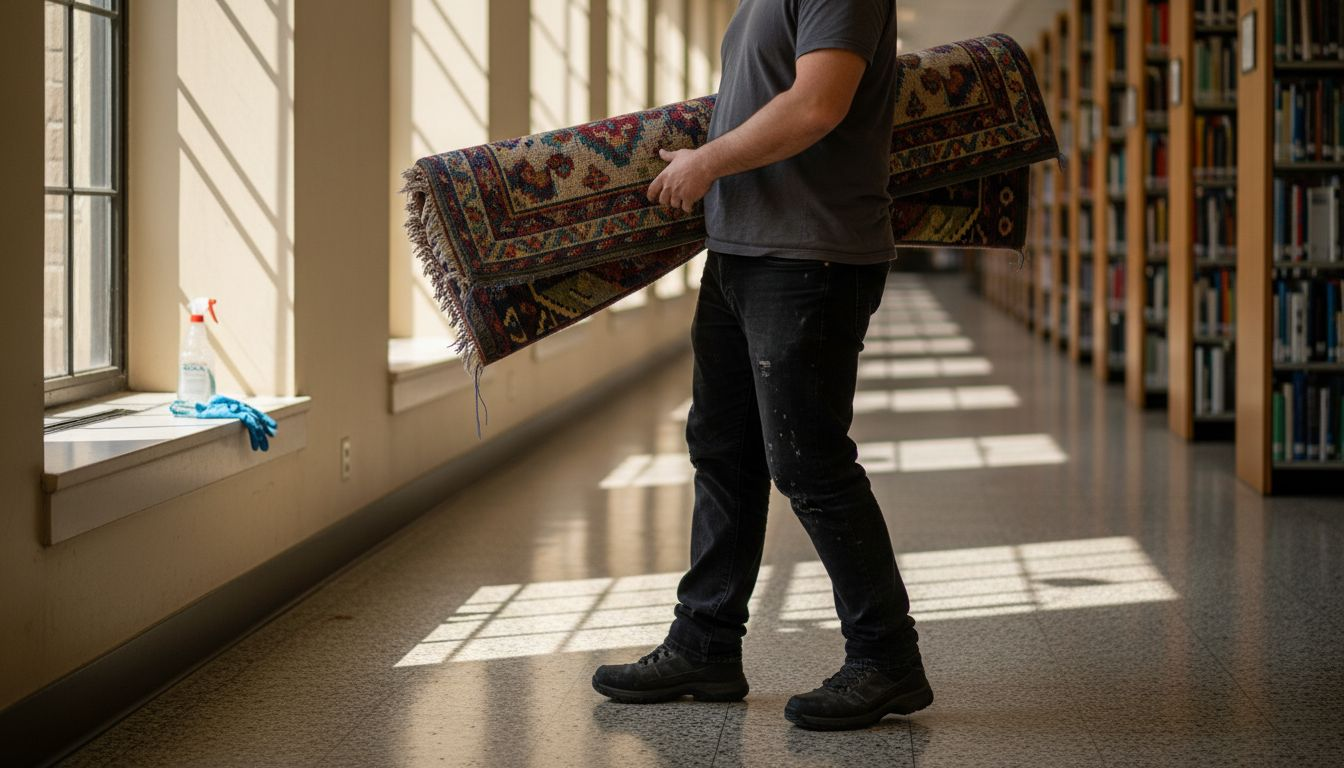
Here’s a concise comparison of common hallway mat types and their best-use scenarios:
| Mat Type | Ideal Application | Durability Level |
|---|---|---|
| Carpet | Moisture control, indoor halls | Moderate |
| Rubber-backed | High-traffic, slip-prone areas | High |
| Woven | Decorative residential corridors | Low to moderate |
| Synthetic performance | Large commercial entrances | Very high |
| Modular entrance | Spaces with custom-shaped entries | High |
Pro tip: Select hallway mats based on specific traffic patterns, moisture levels, and potential safety risks to maximize long-term effectiveness and protection.
Key Features and Material Selection
Selecting the right hallway mat involves careful consideration of multiple performance criteria that directly impact safety, durability, and functionality. Material selection standards provide critical guidance for facility managers seeking optimal floor covering solutions in high-traffic environments.
Key features that define hallway mat performance include:
- Abrasion Resistance: Ability to withstand constant foot traffic
- Slip Resistance: Critical safety metric preventing accidents
- Impact Absorption: Reduces fatigue and protects underlying flooring
- Moisture Management: Capturing and containing water and debris
- Thermal Stability: Maintaining performance across temperature variations
Architectural material selection principles emphasize the importance of balancing technical performance with practical considerations. Facility managers must evaluate material choices based on anticipated traffic patterns, environmental conditions, maintenance requirements, and budget constraints. Materials like high-grade vinyl, specialized rubber compounds, and engineered textile blends offer sophisticated solutions that meet rigorous performance standards while providing aesthetic flexibility.
Pro tip: Conduct a comprehensive site assessment to determine specific performance requirements before selecting hallway mat materials, ensuring optimal long-term protection and value.
Safety, Compliance, and Maintenance Needs
Hallway floor mats represent critical infrastructure elements that demand rigorous attention to safety standards and maintenance protocols. Resilient floor covering standards establish comprehensive guidelines that facility managers must carefully navigate to ensure optimal performance and legal compliance.
Key compliance requirements for hallway floor mats include:
- Slip Resistance: Meeting minimum friction coefficient standards
- Emergency Egress: Maintaining clear pathways during evacuation scenarios
- Accessibility: Ensuring compatibility with ADA regulations
- Trip Hazard Mitigation: Preventing uneven surface transitions
- Fire Safety: Using materials that meet fire code specifications
Legal frameworks for hallway safety emphasize the critical importance of maintaining clear, accessible pathways. Facility managers must implement systematic maintenance protocols that include regular inspections, cleaning, and replacement of floor mats to prevent degradation, maintain safety standards, and minimize potential liability risks. This proactive approach ensures continuous protection for building occupants and demonstrates responsible facility management.
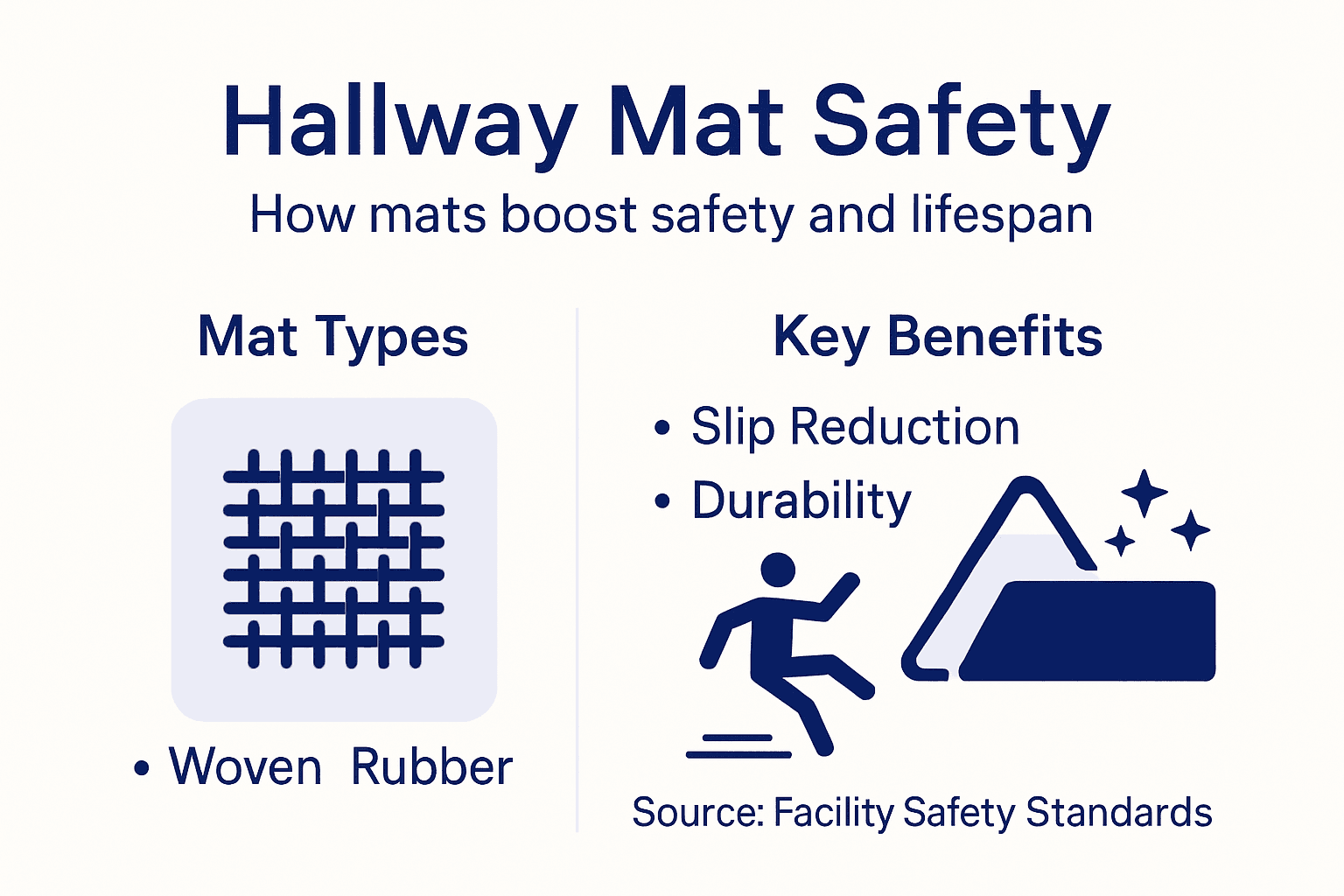
Pro tip: Develop a quarterly inspection and replacement schedule for hallway floor mats to maintain consistent safety performance and compliance with regulatory standards.
Below is a summary of facility maintenance actions and their impact on safety compliance:
| Maintenance Action | Safety Impact | Recommended Frequency |
|---|---|---|
| Regular inspections | Early hazard detection | Quarterly |
| Professional cleaning | Maintains slip resistance | Monthly |
| Mat replacement | Prevents material degradation | Every 1-2 years |
| Compliance reviews | Ensures legal standards met | Annually |
Cost, Customization, and Branding Options
Custom hallway floor mats represent a sophisticated intersection of functional safety and strategic branding opportunities for commercial facilities. Mass customization research reveals innovative approaches that balance design flexibility with cost-effective manufacturing techniques, enabling businesses to create tailored solutions without sacrificing performance standards.
Customization options for hallway floor mats typically include:
- Color Matching: Precise color selections aligned with corporate branding
- Logo Integration: Custom printed logos and brand messaging
- Size Specifications: Tailored dimensions for unique architectural spaces
- Material Variations: Performance-grade materials with aesthetic considerations
- Edge Treatments: Custom border and edge finishing options
Resilient floor covering standards provide critical guidelines for manufacturers developing customized floor mat solutions. Facility managers must carefully evaluate cost considerations that balance initial investment with long-term performance, recognizing that strategic customization can simultaneously enhance safety, brand visibility, and professional aesthetic presentation.
Pro tip: Request material samples and conduct durability testing before large-scale custom floor mat investments to ensure performance matches design expectations.
Common Mistakes When Choosing Mats
Selecting hallway floor mats requires careful consideration of multiple safety and performance factors. Floor mat selection guidelines highlight critical errors that facility managers frequently encounter when choosing floor coverings for high-traffic areas.
Common mistakes in hallway mat selection include:
- Excessive Thickness: Creating unexpected trip hazards
- Improper Edge Design: Selecting mats with curled or raised edges
- Insufficient Slip Resistance: Compromising pedestrian safety
- Inadequate Maintenance Planning: Neglecting regular cleaning and replacement
- Inappropriate Material Selection: Choosing materials incompatible with environmental conditions
Hallway safety guidelines emphasize the importance of understanding environmental context and traffic patterns. Facility managers must carefully evaluate mat placement, ensuring compliance with fire safety codes and avoiding obstructions that could impede emergency egress. Comprehensive assessment of mat characteristics goes beyond simple aesthetic considerations, demanding a holistic approach to safety, functionality, and long-term performance.
Pro tip: Conduct a comprehensive site evaluation and perform multiple material tests before finalizing hallway mat selections to mitigate potential safety and performance risks.
Enhance Hallway Safety and Longevity with Mats4U Solutions
Managing high foot traffic while ensuring safety and floor protection requires the right hallway mats built for durability and slip resistance. This article highlights the importance of selecting mats that meet abrasion resistance and compliance standards to reduce slip hazards and protect your flooring investment. If you are focused on safety, maintenance ease, and long-lasting performance in commercial environments, our collection of Commercial Mats offers a variety of high-quality options engineered to meet these crucial needs.
Take control of your facility’s safety today by choosing mats designed for peak performance under constant use. Explore our Indoor Mats for effective moisture management and durability, or visit Mats4U.com for a full range of customizable and ready-to-ship floor mat solutions built in the USA. Don’t wait until hazards appear—invest now for safer halls and long-term savings with professional-grade mats tailored to your environment.
Frequently Asked Questions
What are the primary functions of hallway floor mats?
Hallway floor mats provide stable surface transitions, minimize slip hazards, capture moisture and debris, protect underlying floor surfaces, and facilitate smooth pedestrian movement in high-traffic areas.
How do I choose the right floor mat for my hallway?
When selecting a hallway mat, consider factors such as traffic patterns, moisture levels, slip resistance, and durability ratings to ensure maximum safety and effectiveness.
What types of materials are commonly used for hallway mats?
Common materials for hallway mats include carpet, rubber-backed mats, woven options, synthetic performance materials, and modular entrance mats, each serving different functional requirements and environmental conditions.
What maintenance practices are necessary for hallway floor mats?
Regular inspections, professional cleaning, and timely replacements are essential for maintaining hallway mats. Developing a quarterly inspection schedule can help ensure consistent safety performance and compliance with standards.


