


Many facility managers believe that commercial mats can’t be both durable and sustainable. This misconception leads organizations to compromise on either performance or environmental responsibility. The truth is that modern eco-friendly commercial mats combine exceptional durability with genuine sustainability benefits, making them ideal for high-traffic environments. These solutions reduce environmental impact while maintaining the safety, cleanliness, and longevity that commercial facilities demand. Understanding how to select, implement, and maintain eco-friendly mats helps you advance your organization’s sustainability goals without sacrificing operational performance. This guide walks you through material options, performance comparisons, implementation strategies, and practical considerations for integrating sustainable matting solutions into your facility.
Table of Contents
- Key takeaways
- Understanding eco-friendly commercial mats
- Benefits and performance of eco-friendly mats in commercial spaces
- Comparing popular eco-friendly commercial mat options
- Implementing eco-friendly mats in commercial facilities
- Explore eco-friendly mat options at Mats4U
- Frequently asked questions
Key Takeaways
| Point | Details |
|---|---|
| Sustainable durability | Modern eco friendly mats combine long wear with environmental benefits for high traffic spaces. |
| Material choices matter | Selecting recycled, natural, or sustainably sourced mats affects both environmental impact and product performance. |
| Maintenance extends lifespan | Regular cleaning and proper upkeep reduce waste and extend mat lifespan. |
| Certifications verify authenticity | Look for Green Seal, FloorScore, and Global Recycle Standard to verify content, emissions, and end to end material tracking. |
Understanding eco-friendly commercial mats
Eco-friendly commercial mats use recycled, natural, or sustainably sourced materials that minimize environmental impact throughout their lifecycle. These products differ from conventional mats in both composition and manufacturing processes. The definition extends beyond simply using recycled content to encompass the entire production chain, from raw material extraction through end-of-life disposal.
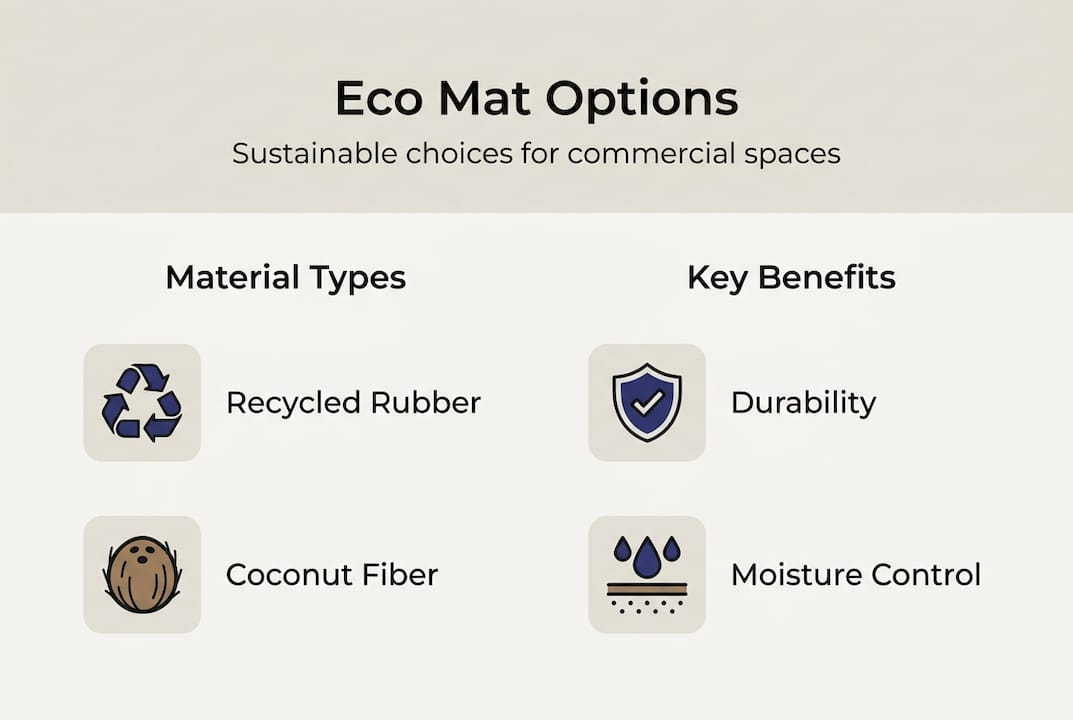
Sustainable materials commonly used in commercial mats include recycled rubber from post-consumer tires, natural fibers like coconut coir and jute, and reclaimed PET plastic from bottles. Each material offers distinct advantages for specific applications. Recycled rubber provides exceptional durability and weather resistance for entrance areas. Natural fibers excel at moisture absorption and biodegradability. Reclaimed plastics offer lightweight versatility with reduced virgin material consumption.
Production processes significantly influence environmental credentials. Low-impact manufacturing techniques reduce water consumption, minimize chemical use, and lower carbon emissions during fabrication. Some manufacturers employ closed-loop systems that recapture and reuse production waste. Others utilize renewable energy sources to power facilities. These practices reduce the carbon footprint associated with mat production by 40-60% compared to conventional manufacturing.
Certifications provide objective verification of environmental claims. Look for Green Seal certification, which evaluates products across multiple sustainability criteria including material content, manufacturing processes, and indoor air quality impact. FloorScore certification specifically addresses volatile organic compound emissions, ensuring mats won’t degrade indoor air quality. The Global Recycle Standard verifies recycled content claims and tracks material chain of custody.
Beyond sustainability, eco-friendly floor mats deliver performance benefits including enhanced indoor air quality through low-emission materials. Many sustainable mats avoid the chemical additives and plasticizers found in conventional products that can off-gas harmful compounds. This creates healthier indoor environments for employees and visitors while supporting LEED certification requirements. The combination of environmental responsibility and functional performance makes these mats practical choices for organizations committed to sustainability without compromising operational needs.
Benefits and performance of eco-friendly mats in commercial spaces
Eco-friendly mats can match or exceed performance of traditional mats in durability and safety metrics that matter most to facility managers. Recycled rubber mats demonstrate exceptional wear resistance, often outlasting virgin rubber products by 20-30% in high-traffic applications. Natural fiber mats provide superior moisture absorption rates, removing up to 85% more water from footwear compared to synthetic alternatives. This performance advantage stems from material properties rather than environmental compromise.
Durability comparisons reveal surprising advantages for sustainable options. Recycled rubber mats maintain structural integrity through millions of foot traffic cycles without degrading. The vulcanization process used in recycling actually strengthens rubber fibers, creating denser material than many virgin alternatives. Natural fiber mats resist crushing and matting better than synthetic pile products, maintaining appearance and function longer. Modular eco-friendly tiles enable targeted replacement of worn sections rather than entire mat systems, extending overall service life.
Safety features integrate seamlessly with sustainable design. Anti-slip backing systems prevent mat migration without relying on chemical adhesives. Beveled edges reduce trip hazards while using recycled materials. Anti-fatigue properties in recycled rubber and natural cork reduce employee strain in standing work areas. These safety benefits protect workers while supporting environmental objectives.
| Performance metric | Eco-friendly mats | Traditional mats | Advantage |
|---|---|---|---|
| Average lifespan | 5-7 years | 3-5 years | 40% longer service |
| Moisture absorption | 85% removal rate | 60% removal rate | 25% better performance |
| Carbon footprint | 40% lower emissions | Baseline | Significant reduction |
| Recyclability | 90% recoverable | 20% recoverable | Minimal landfill impact |
Environmental benefits extend throughout the product lifecycle. Manufacturing eco-friendly mats diverts approximately 20 pounds of waste from landfills per standard entrance mat. This waste reduction scales significantly across large facilities with multiple mat locations. End-of-life recycling programs enable closed-loop material recovery, with some manufacturers accepting worn mats for reprocessing into new products. This circular approach eliminates disposal concerns while creating ongoing material streams.
Corporate sustainability goals receive measurable support from eco-friendly mat adoption. Each mat contributes quantifiable metrics for environmental reporting, including diverted waste tonnage, recycled content percentages, and carbon footprint reductions. These data points strengthen sustainability narratives for stakeholders, customers, and certification programs. Organizations pursuing LEED certification earn points through sustainable purchasing decisions including floor mat selection.
Pro Tip: Implement quarterly mat inspections to identify wear patterns early. Rotating mats between high and moderate traffic areas extends overall lifespan by 30-40%, maximizing your sustainability investment while maintaining consistent appearance across your facility.
Comparing popular eco-friendly commercial mat options
Various eco-friendly mat options vary by material, durability, maintenance, and cost, requiring careful evaluation for specific facility needs. Recycled rubber mats dominate entrance applications due to exceptional weather resistance and scraping ability. These mats handle extreme temperature fluctuations, heavy foot traffic, and moisture exposure without degrading. Manufacturing processes convert post-consumer tires into durable matting through grinding, cleaning, and rebinding with minimal virgin material addition.
Coconut coir mats provide natural fiber alternatives with superior moisture absorption. Extracted from coconut husks, coir fibers create stiff, scraping surfaces that remove debris effectively. These mats biodegrade at end of life, eliminating disposal concerns. However, coir requires more frequent replacement than rubber in extremely high-traffic locations, typically lasting 2-3 years versus 5-7 years for recycled rubber. Indoor applications suit coir best, as prolonged moisture exposure can accelerate natural decomposition.
Natural fiber blends combine materials like jute, cotton, and bamboo for balanced performance. These mats offer softer surfaces suitable for interior spaces while maintaining eco-friendly credentials. Fiber blends absorb moisture well and provide comfortable walking surfaces. Maintenance requirements include regular vacuuming and periodic deep cleaning to prevent fiber matting. Durability falls between coir and recycled rubber, with typical service lives of 3-4 years in commercial settings.
Modular tile systems using recycled plastics deliver versatility and easy maintenance. Individual tiles snap together to create custom configurations for any space size or shape. Damaged or worn tiles receive targeted replacement without discarding entire mat systems. This modularity reduces long-term costs and waste. Recycled PET plastic tiles resist moisture, chemicals, and staining while providing ergonomic cushioning for standing workers.
| Mat type | Durability rating | Maintenance frequency | Initial cost | Best application |
|---|---|---|---|---|
| Recycled rubber | Excellent (5-7 years) | Weekly vacuuming | $$ | Outdoor entrances, high-traffic areas |
| Coconut coir | Good (2-3 years) | Bi-weekly cleaning | $ | Indoor entrances, moderate traffic |
| Natural fiber blend | Very good (3-4 years) | Weekly vacuuming | $$ | Interior spaces, offices |
| Modular recycled tiles | Excellent (6-8 years) | Monthly deep clean | $$$ | Standing work areas, custom spaces |
Cost considerations extend beyond initial purchase price to lifecycle value. Recycled rubber mats command higher upfront investment but deliver lower cost per year of service. Natural fiber options offer budget-friendly entry points with acceptable performance for moderate traffic. Modular systems maximize flexibility and minimize replacement waste despite premium pricing. Calculate total cost of ownership including purchase price, maintenance expenses, and replacement frequency for accurate comparisons.
Maintenance requirements vary by material composition. Recycled rubber tolerates pressure washing and harsh cleaning without degrading. Natural fibers require gentler approaches using vacuum extraction and mild detergents to prevent damage. Modular tiles enable removal for thorough cleaning in commercial facilities. All eco-friendly mats benefit from regular debris removal to prevent abrasive particle accumulation that accelerates wear.
Pro Tip: Choose modular tile systems for areas requiring frequent deep cleaning or reconfiguration. The ability to remove, clean, and reinstall individual sections reduces downtime and labor costs while extending overall system life by enabling thorough maintenance that fixed mats can’t accommodate.
Implementing eco-friendly mats in commercial facilities
Proper installation and maintenance extend mat life and enhance sustainability benefits through optimized performance. Strategic implementation begins with comprehensive site assessment identifying high-traffic zones, moisture exposure areas, and specific functional requirements. Entrance locations demand aggressive scraping and moisture removal. Interior transitions need soil retention without excessive thickness. Standing work areas require ergonomic cushioning. Matching mat properties to location demands maximizes effectiveness.
Installation follows systematic steps ensuring proper fit and function:
- Measure installation areas precisely, accounting for door swing clearance and traffic flow patterns to prevent interference.
- Prepare subfloors by cleaning thoroughly and addressing any damage that could telegraph through mats or create trip hazards.
- Position mats with beveled edges aligned to traffic direction, ensuring smooth transitions that minimize trip risks.
- Verify mat stability through walk tests, adjusting placement or adding anchoring systems if movement occurs during normal use.
- Document installation dates and locations for maintenance tracking and lifecycle management across your facility.
- Train staff on proper mat handling during cleaning to prevent damage from inappropriate techniques or harsh chemicals.
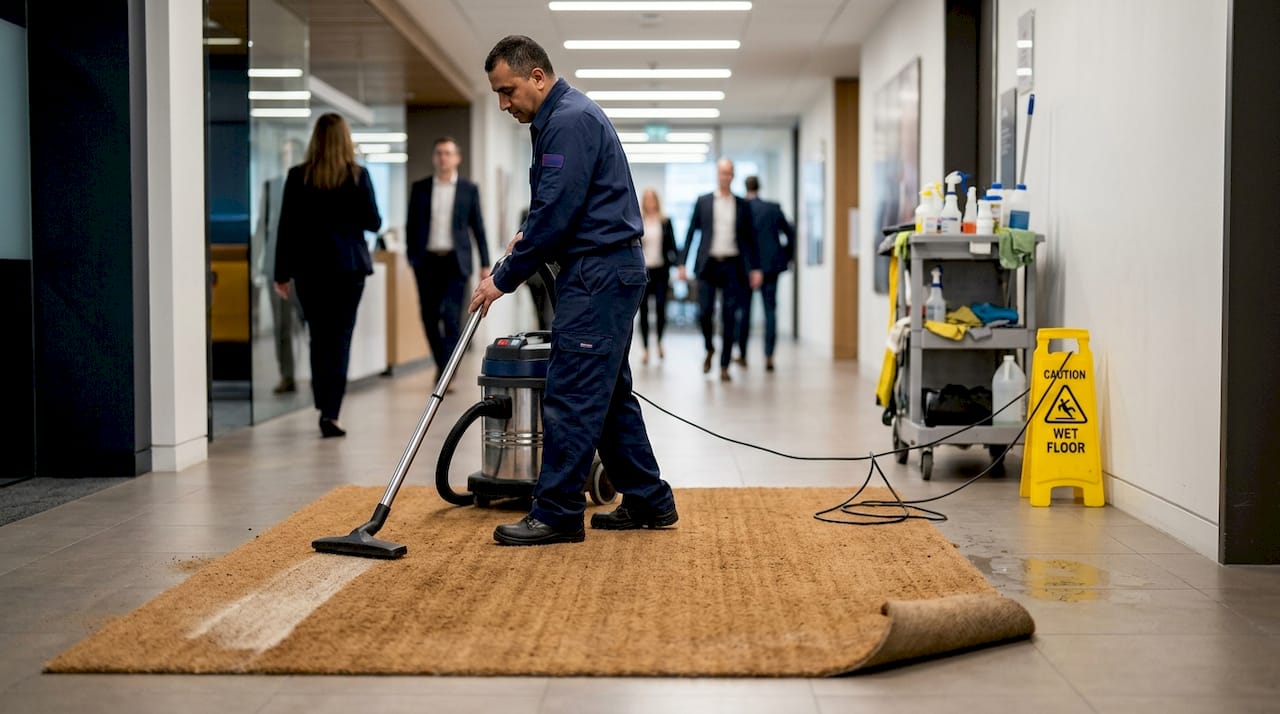
Maintenance routines directly impact mat longevity and environmental value. Daily debris removal through vacuuming or sweeping prevents abrasive particle buildup that accelerates fiber wear. Weekly deep cleaning using appropriate methods for each material type maintains appearance and function. Monthly inspections identify wear patterns requiring intervention before safety or performance degrades. Seasonal rotations between high and moderate traffic locations balance wear distribution.
Return on investment calculations should incorporate multiple factors beyond simple purchase price comparisons. Extended service life reduces replacement frequency and associated labor costs. Improved moisture and soil removal protects interior flooring from damage, lowering maintenance expenses. Enhanced safety reduces slip and fall incidents with associated liability costs. Sustainability reporting benefits support corporate environmental goals and stakeholder expectations. Typical ROI timelines range from 18-36 months depending on traffic levels and material selection.
Employee training ensures proper mat care throughout service life. Cleaning staff need material-specific guidance on appropriate cleaning methods, chemical compatibility, and handling procedures. Facility managers require documentation on inspection criteria, replacement triggers, and vendor contacts. Building occupants benefit from understanding mat purpose and proper use to maximize soil and moisture removal. Comprehensive training programs protect your mat investment while building organizational sustainability awareness.
Cost savings accumulate through reduced replacement cycles, lower maintenance expenses, and avoided flooring damage. A facility replacing conventional mats every three years can extend cycles to five or seven years with quality eco-friendly alternatives. This frequency reduction cuts replacement costs by 30-50% over a decade. Improved soil and moisture control reduces interior floor cleaning requirements by up to 60%, lowering labor and supply expenses. These savings often exceed the premium paid for sustainable mat options within the first replacement cycle.
Pro Tip: Schedule seasonal mat inspections before peak traffic periods to identify and address wear issues proactively. Spring and fall assessments enable strategic replacements that prevent safety hazards during busy seasons while optimizing budget timing for capital purchases across your facility portfolio.
Explore eco-friendly mat options at Mats4U
Mats4U offers an extensive selection of sustainable commercial mats engineered for durability in high-traffic environments. Our premium custom floor mats combine eco-friendly materials with custom logo capabilities, allowing you to promote your brand while demonstrating environmental commitment. These mats use recycled content without sacrificing the professional appearance your facility demands.
The cushion complete mat delivers anti-fatigue benefits for standing work areas while incorporating sustainable materials. Ergonomic design reduces employee strain in production, retail, and service environments. Our Waterhog Max Grand half oval mat provides exceptional moisture removal at entrances using recycled materials in its construction, combining environmental responsibility with superior performance.
Explore our complete range of eco-friendly commercial mats designed specifically for facility managers pursuing sustainability goals without compromising safety or durability standards.
Frequently asked questions
Are eco-friendly commercial mats more expensive than traditional mats?
Initial purchase prices for eco-friendly mats typically run 15-30% higher than conventional alternatives. However, extended service life and reduced maintenance requirements often result in lower total cost of ownership. Most sustainable mats deliver 40-60% longer service life, offsetting premium pricing within the first replacement cycle. Calculate lifecycle costs rather than focusing solely on upfront investment for accurate financial comparison.
What certifications should I look for when choosing eco-friendly mats?
Prioritize Green Seal certification, which evaluates comprehensive environmental criteria including material sourcing, manufacturing processes, and product performance. FloorScore certification verifies low volatile organic compound emissions, protecting indoor air quality. The Global Recycle Standard confirms recycled content claims and tracks material chain of custody. These third-party certifications provide objective verification of environmental claims beyond marketing statements.
How often should eco-friendly commercial mats be replaced?
Replacement cycles depend on traffic volume, material type, and maintenance quality. High-traffic entrance mats typically require replacement every 5-7 years for recycled rubber, 2-3 years for natural coir, and 6-8 years for modular tile systems. Regular maintenance extends these timelines significantly. Replace mats when wear affects safety through reduced slip resistance, creates trip hazards through curling edges, or degrades appearance beyond acceptable standards for your facility image.
Can eco-friendly mats be customized with company logos?
Many sustainable mat options support custom logo printing and branding without compromising environmental credentials. Premium custom floor mats use eco-friendly materials and low-impact printing processes to create branded entrance solutions. Custom options enable you to promote your organization while demonstrating sustainability commitment. Logo mats create professional first impressions and reinforce brand identity throughout your facility while supporting environmental goals.


